


This post is sponsored by KODIAK – Proven Workforce Solutions. I wouldn’t accept a sponsor for this newsletter unless they were 1) a company I trust and 2) addressing critical issues like skilled labor shortages in construction. KODIAK, which recently merged with Pivot, checks both those boxes. Their mission is to help construction companies find experienced talent, including engineers and project managers for Direct Hire, as well as skilled craft professionals like welders and electricians for contingent staffing. With over three decades of experience, I encourage contractors struggling to find workers to consider KODIAK.
U.S. employers added just 29,000 jobs in September, well short of the expected 90,000, and revisions brought the prior two months down by 60,000.
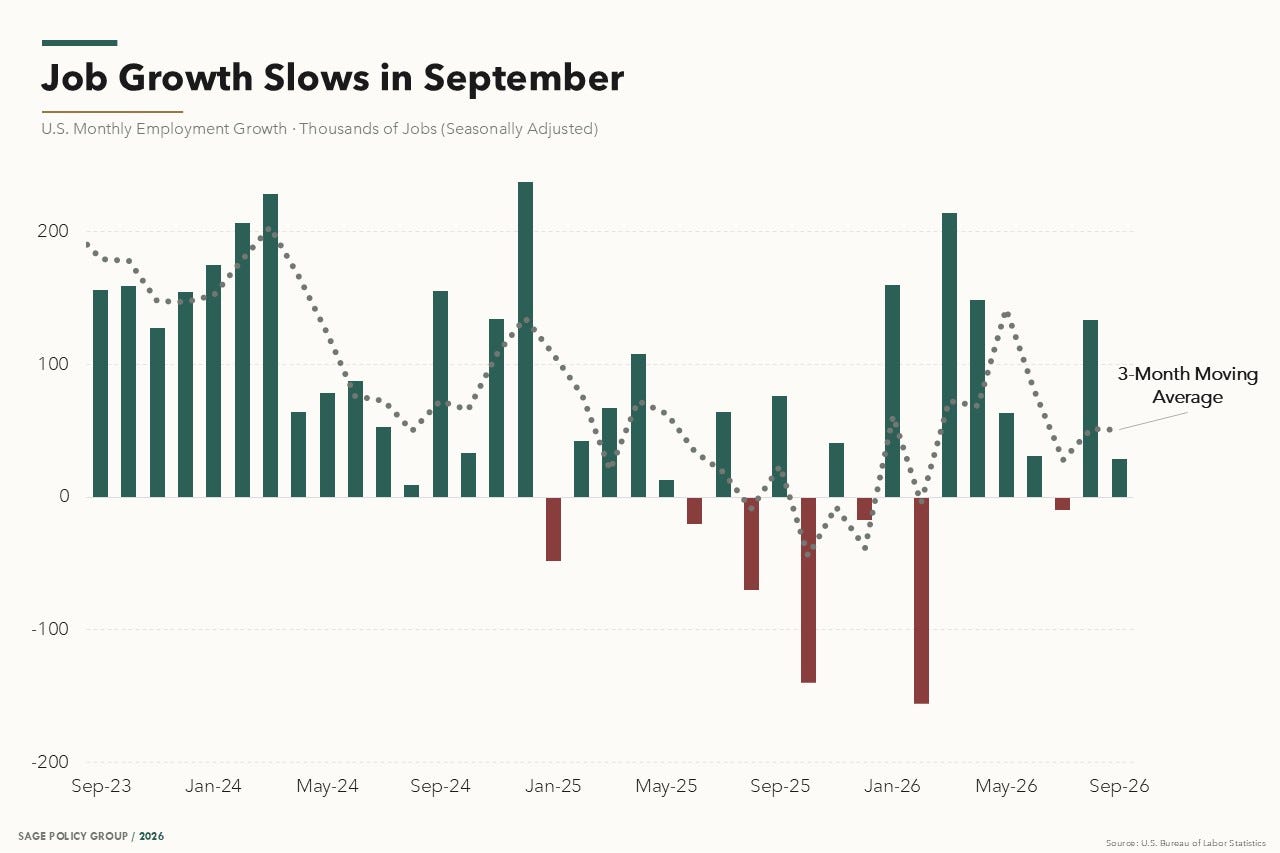
Despite the bad monthly report, we’re still averaging 51,000 new jobs over the past three months. That’s neither spectacular nor particularly worrisome.
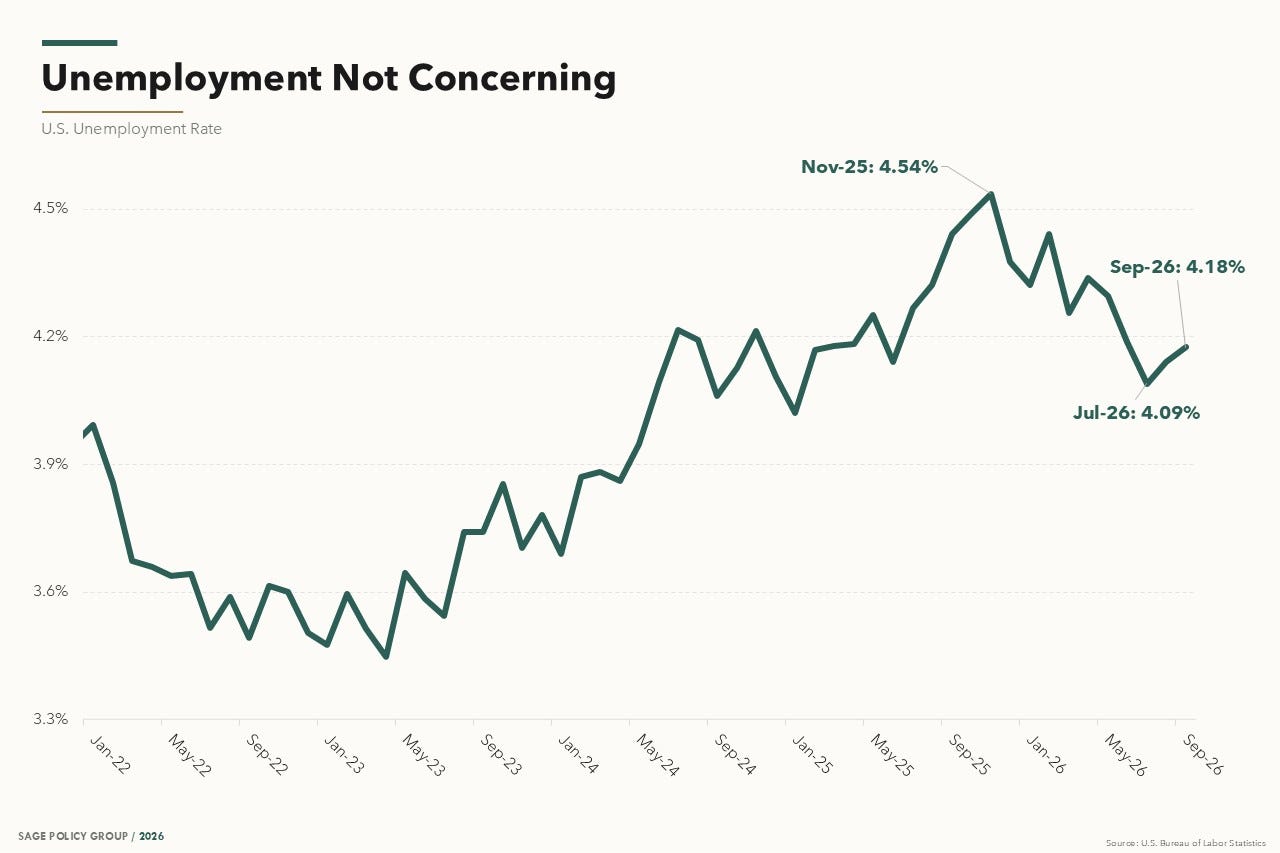
The unemployment rate rose for the second straight month, but that’s hardly a cause for concern. Unemployment is still way down from the November 2025 cyclical peak.
Wage Growth Slows
Average hourly earnings increased just $0.05 in September and are now up just 3.0% over the past year. That’s the smallest year-over-year increase since early 2021. That’s good news on the inflation front but bad news on the consumer-health front.
The Best News in Today’s Report
The prime age (25-54) employment to population ratio—a pretty important indicator—rose to a healthy 80.7% in September. That’s higher than at any point from May 2001 to March 2023 and shows that a large share of working age people are, in fact, working.
Job Growth Remains Highly Concentrated
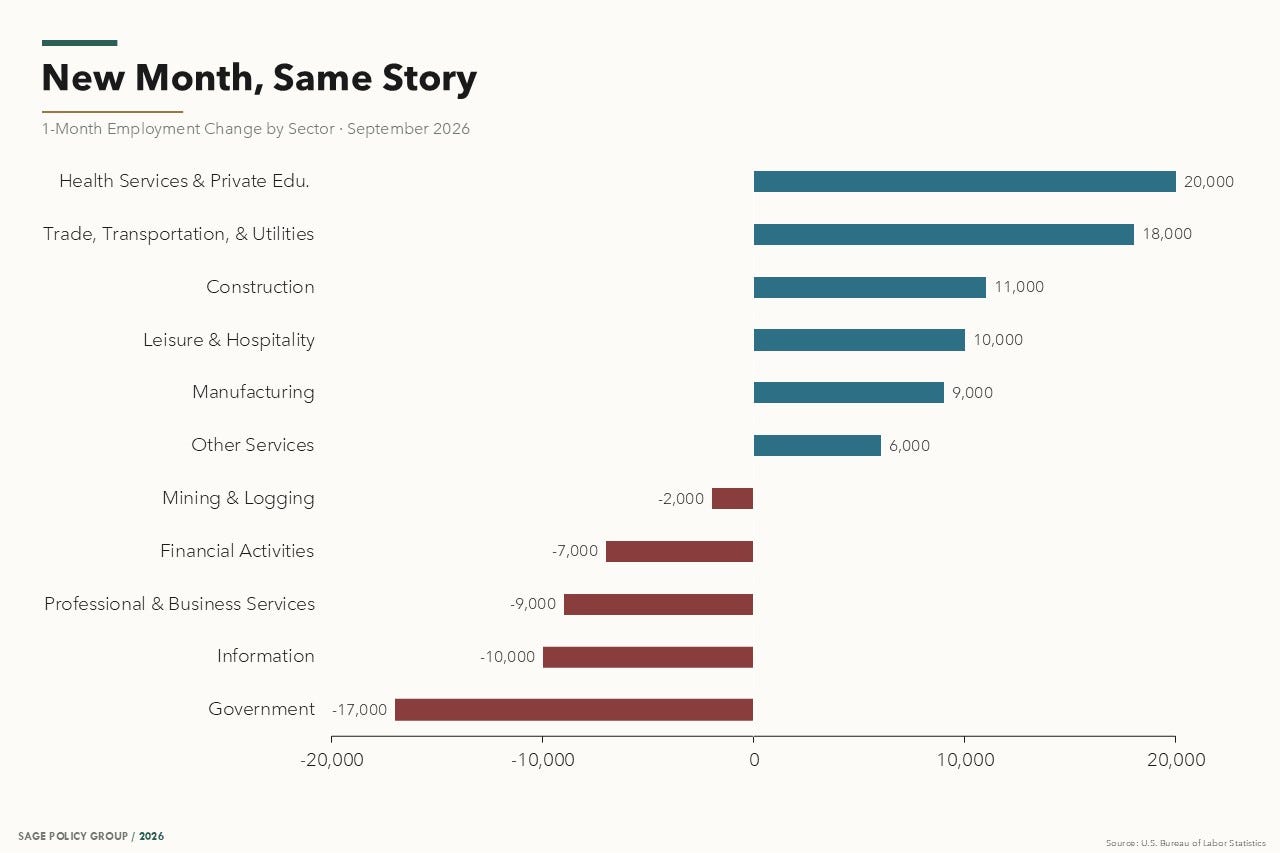
Healthcare led job growth again in September. No surprise there. A few other industries tacked on jobs for the month, including trade/transportation, leisure/hospitality, construction (thank data centers), and manufacturing, but it’s still all about healthcare.
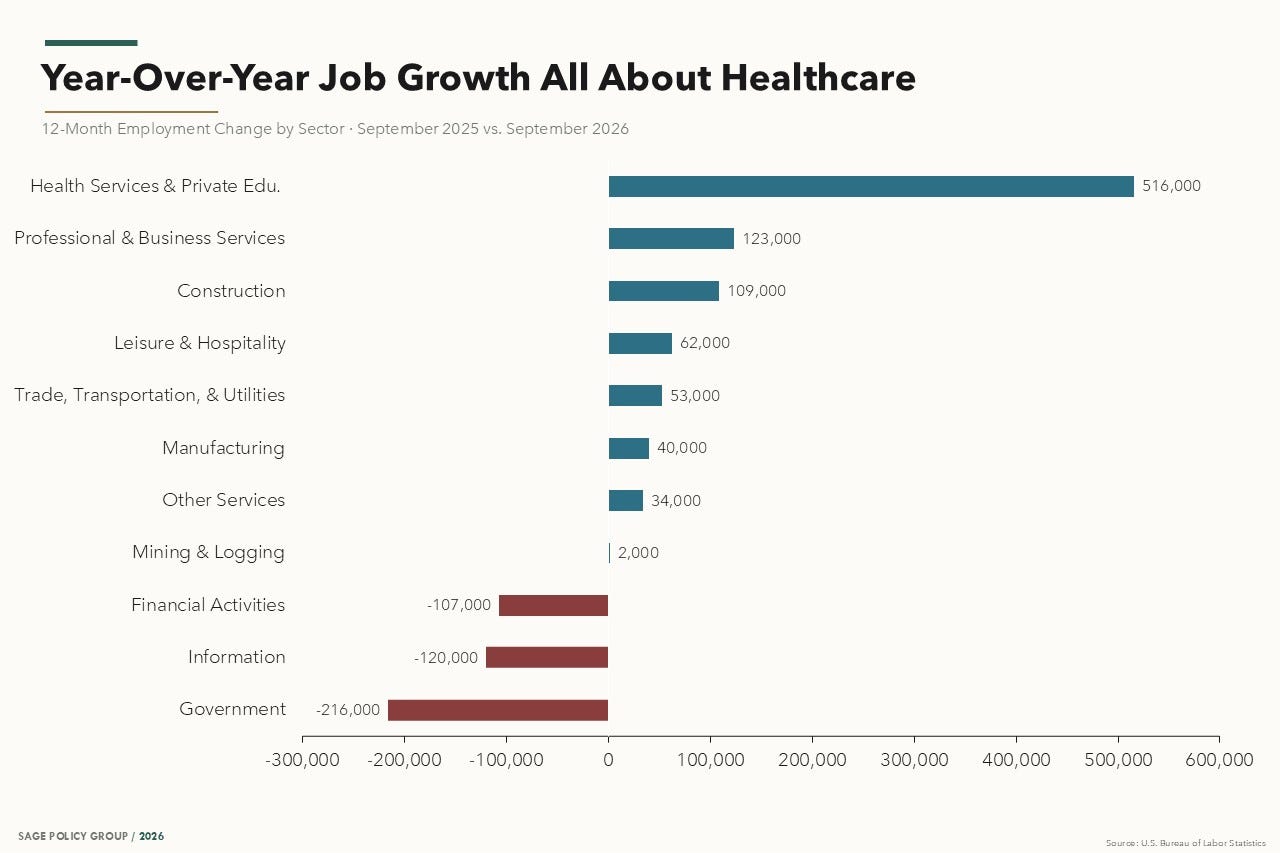
Over the past year, healthcare has added more than 500,000 jobs, while all other industries have lost a combined 20,000 (though that does have a lot to do with federal government job losses).
What’s Going on with Information?
The information industry (think tech and media) continued to hemorrhage jobs in September, with employment now back to December 2020 levels.
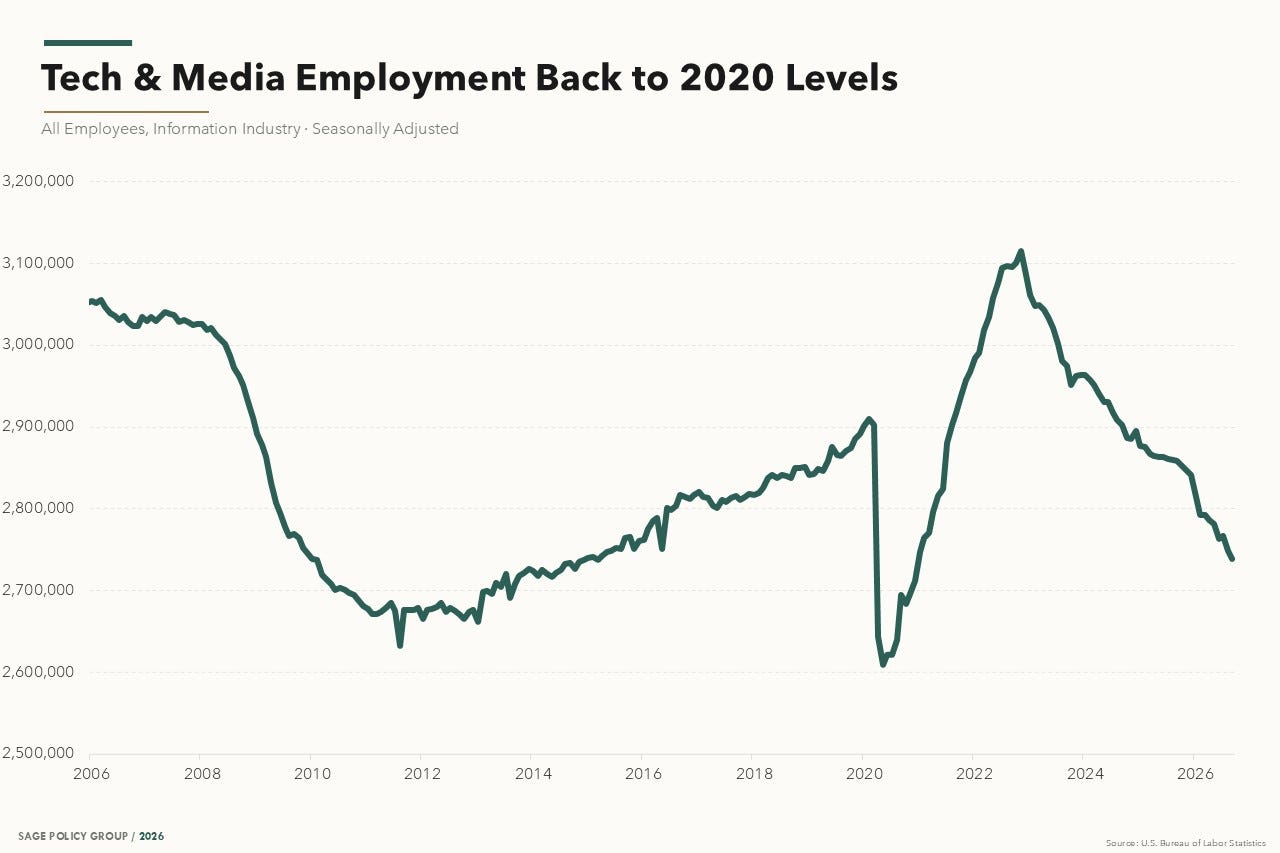
Part of this is the ongoing, longstanding decline in traditional media. This century could be going a lot better for the publishing and broadcasting industries.
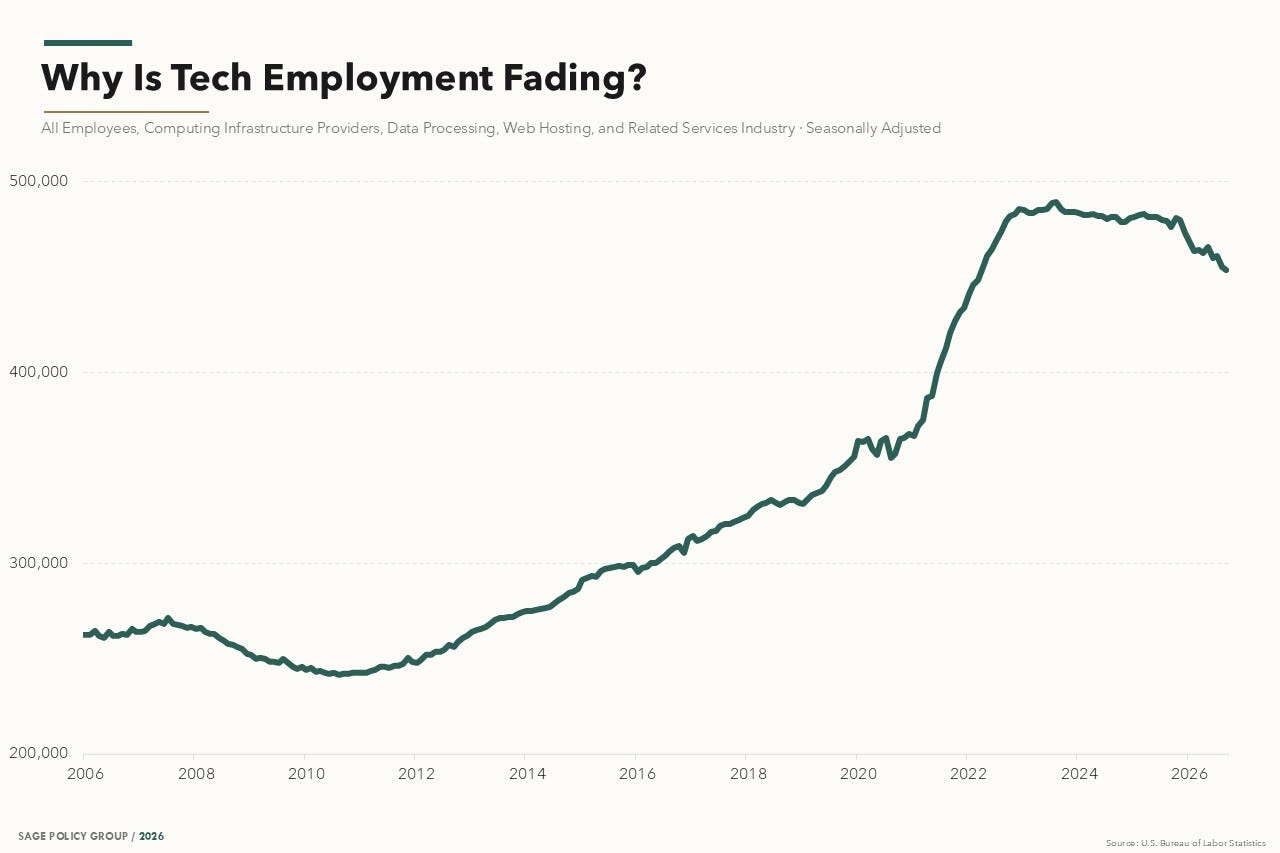
Since late 2025, though, we’ve seen a sudden and fairly sharp drop in tech employment. Is this AI replacing programming jobs? Ehhhh, it’s possible, but at least part of this—and maybe a lot of it—is tech companies trimming back their bloated staffs after the insane, zero-interest-rate fueled hiring binge of the early 2020s.
The Big Picture
This wasn’t a particularly strong jobs report, but it’s also not a cause for concern. Unemployment is low, we’re tacking on 50,000 new jobs a month, and the prime-age EPOP is just fine.
Before today’s jobs report the general consensus was that the labor market was running hot, driving up inflation. That’s maybe a little less of a concern now and, all else equal, takes a tiny bit of pressure off the Fed.
What’s Next
Anirban is currently working on Week in Review. That will be out later today and is just for paying subscribers. If that’s not you and you want it to be, just click the button below: