


This post is sponsored by KODIAK – Proven Workforce Solutions. I wouldn’t accept a sponsor for this newsletter unless they were 1) a company I trust and 2) addressing critical issues like skilled labor shortages in construction. KODIAK, which recently merged with Pivot, checks both those boxes. Their mission is to help construction companies find experienced talent, including engineers and project managers for Direct Hire, as well as skilled craft professionals like welders and electricians for contingent staffing. With over three decades of experience, I encourage contractors struggling to find workers to consider KODIAK.

Today’s jobs report was, in a word, weird. Also good, but mostly just weird.
U.S. employment rose by a cooler-than-expected but still fine 57,000 jobs in June, and the two previous months’ estimates were revised down by a combined 74,000 jobs.
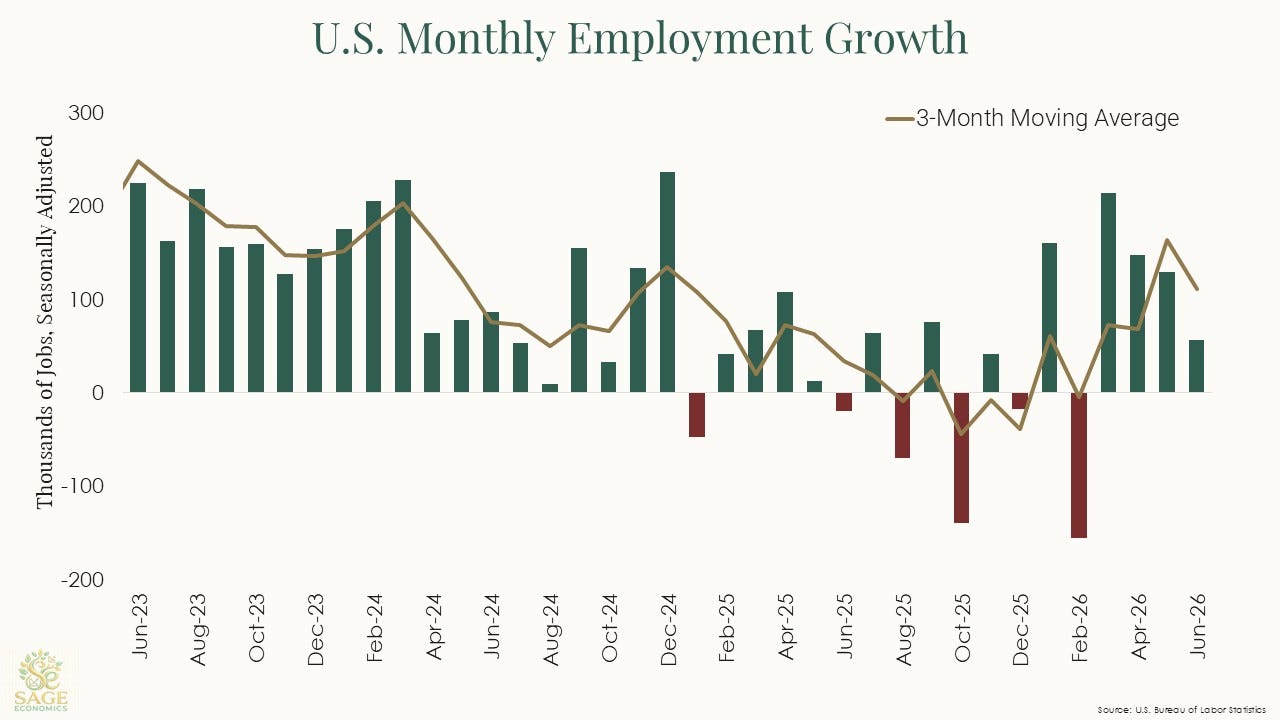
Even with June’s soft growth and the downward revisions, we’ve still averaged a perfectly acceptable 111,000 jobs per month since April.
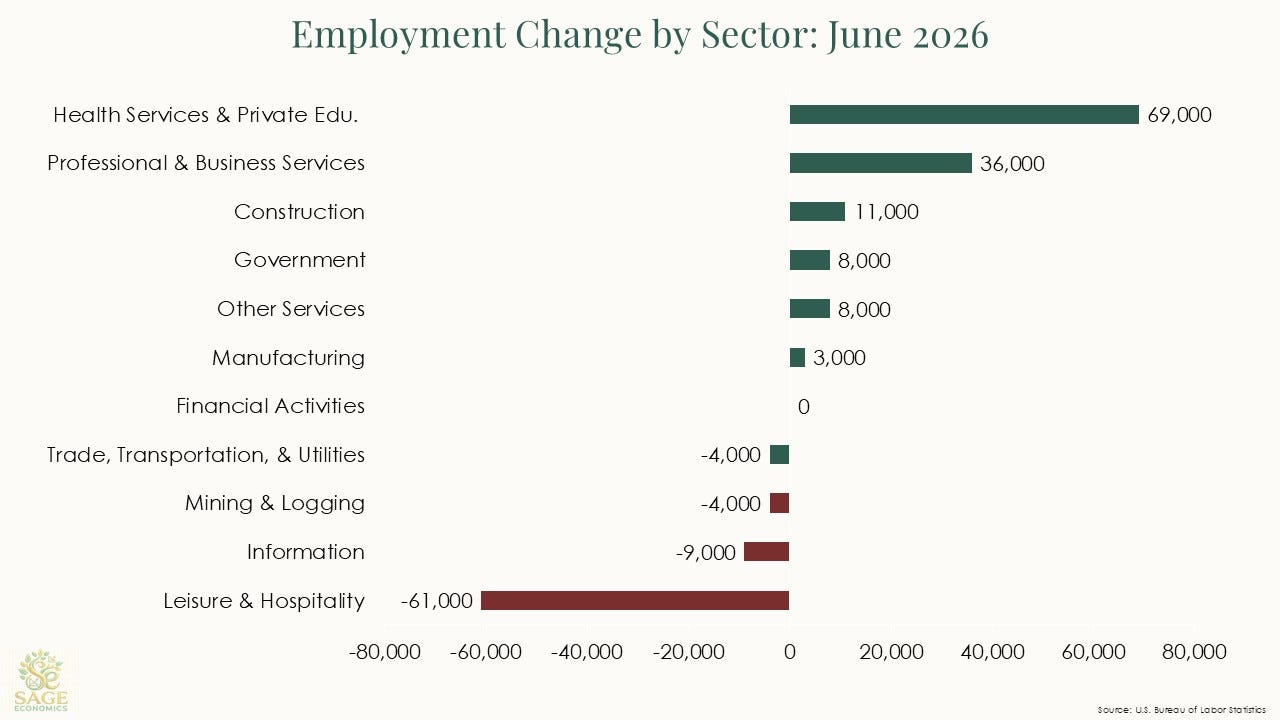
Here’s where the weirdness creeps in: leisure and hospitality, the second fastest growing segment over the past year, lost 61,000 jobs in June. This doesn’t check out. The World Cup was supposed to cause a ton of hiring at hotels and restaurants. Instead, those two subsegments lost 21,700 and 32,900 jobs for the month, respectively.
The unemployment rate crept down to 4.2%, the lowest level since June 2025, but there’s something wonky going on with the underlying data. The household survey1 shows a sharp decline in the labor force, employment, and unemployment. Even the survey’s more credible and important ratios2 seem off kilter.
The prime age (25-54) employment-population ratio, for instance, plunged to the lowest level since 2022, ending a 3-year period of remarkable stability. That decline was almost entirely due to a breathtaking employment decline in the 25-34 age range.
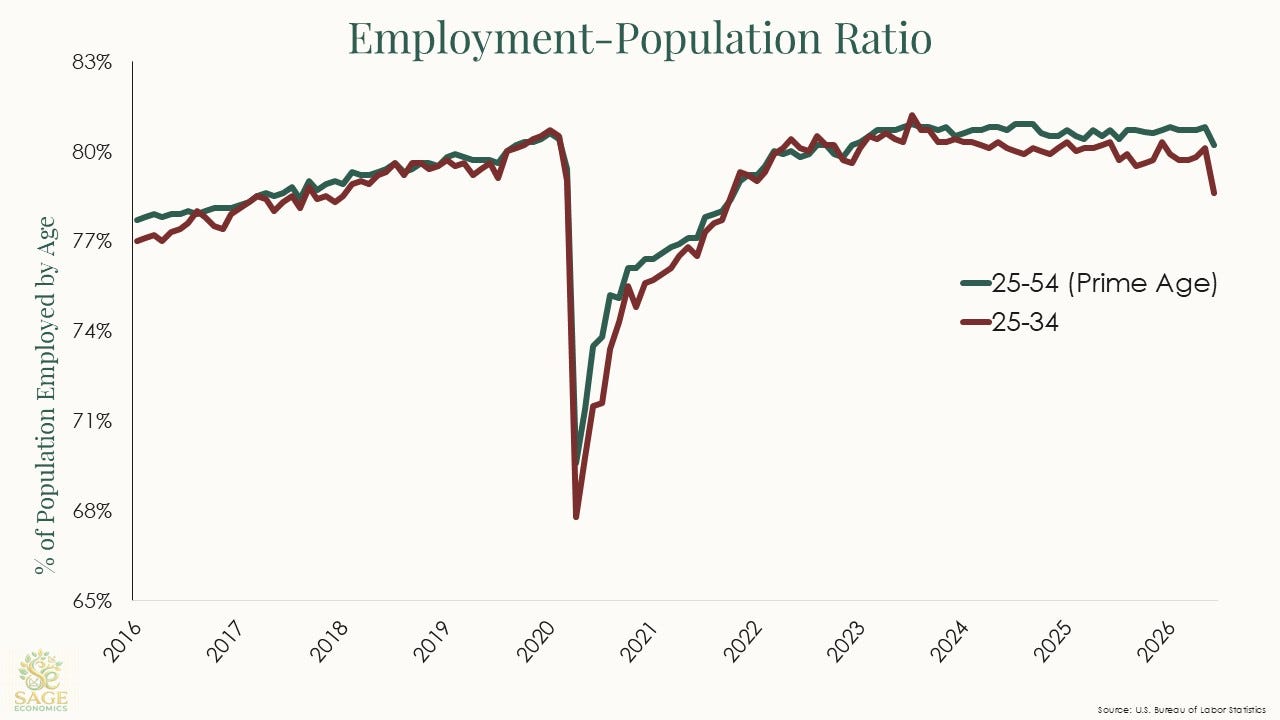
I don’t buy it. Other data points like weekly unemployment insurance claims show that layoffs remain really low, and I don’t think a ton of 25-34 year olds quit their jobs en masse in June. Maybe they were too busy watching the World Cup to respond to the survey?
I don’t know, but I expect a rebound next month.
Three Not-So-Weird Things
Long term (27 week+) unemployment fell to the lowest level since the early months of 2025.
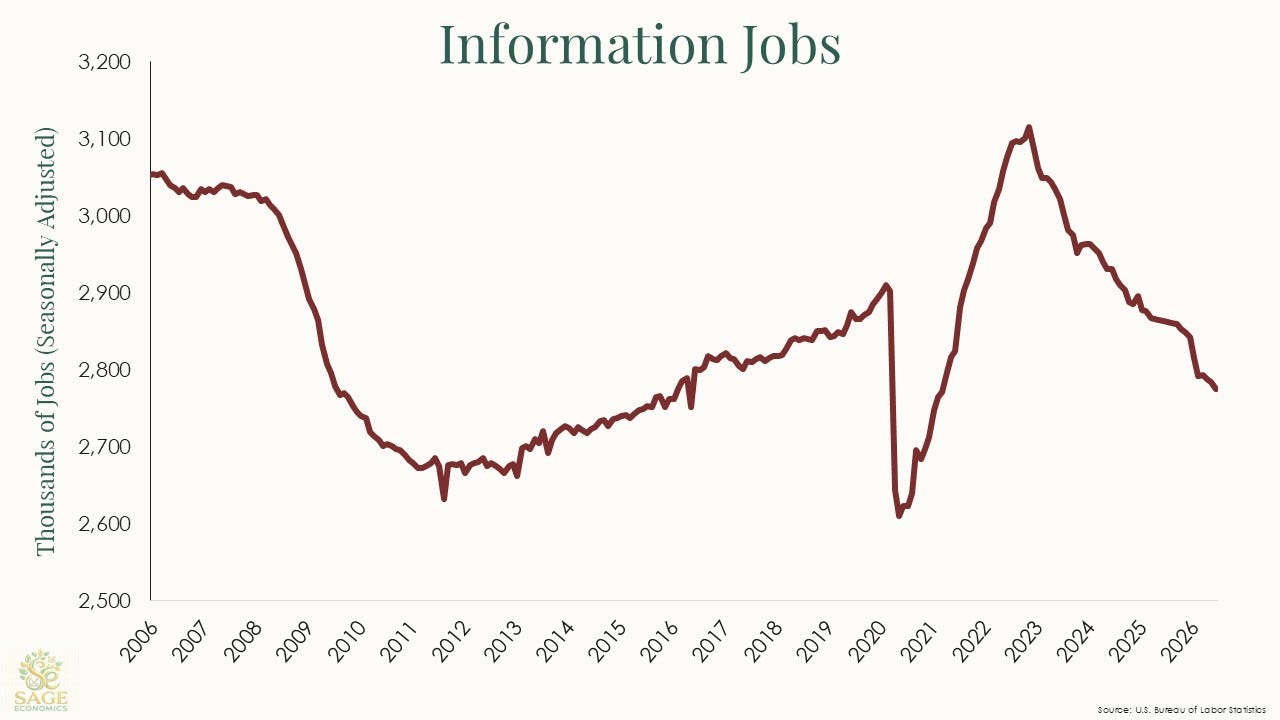
The information industry, which includes news, publishing, and tech, lost jobs again in June, and employment in the category is down to a 10-year low (excluding the pandemic).
Federal government employment has inched up in two straight months and appears to have leveled off after the massive cuts of 2025.
The Big Picture
Oddities aside, this was a solid jobs report. There’s nothing to worry about with the unemployment rate, and the fact that job growth slowed a touch may even calm Fed-fears of an overheated economy.
What’s Next
This week was packed with data releases, and we’ll cover all of them in Week in Review, our every-Friday post that gives you everything you need to know about the economy in a breezy, five-minute read.
That will be out tomorrow and is just for paying subscribers. If that’s not you and you want it to be, just click the button below:
The household survey gives us unemployment rate and labor force data and is separate form the establishment survey, which gives us payroll employment and earnings data.
Household survey data is much better for ratios, like the unemployment rate, than it is for raw counts, like the number of unemployed people.