


This post is sponsored by KODIAK – Proven Workforce Solutions. I wouldn’t accept a sponsor for this newsletter unless they were 1) a company I trust and 2) addressing critical issues like skilled labor shortages in construction. KODIAK, which recently merged with Pivot, checks both those boxes. Their mission is to help construction companies find experienced talent, including engineers and project managers for Direct Hire, as well as skilled craft professionals like welders and electricians for contingent staffing. With over three decades of experience, I encourage contractors struggling to find workers to consider KODIAK.
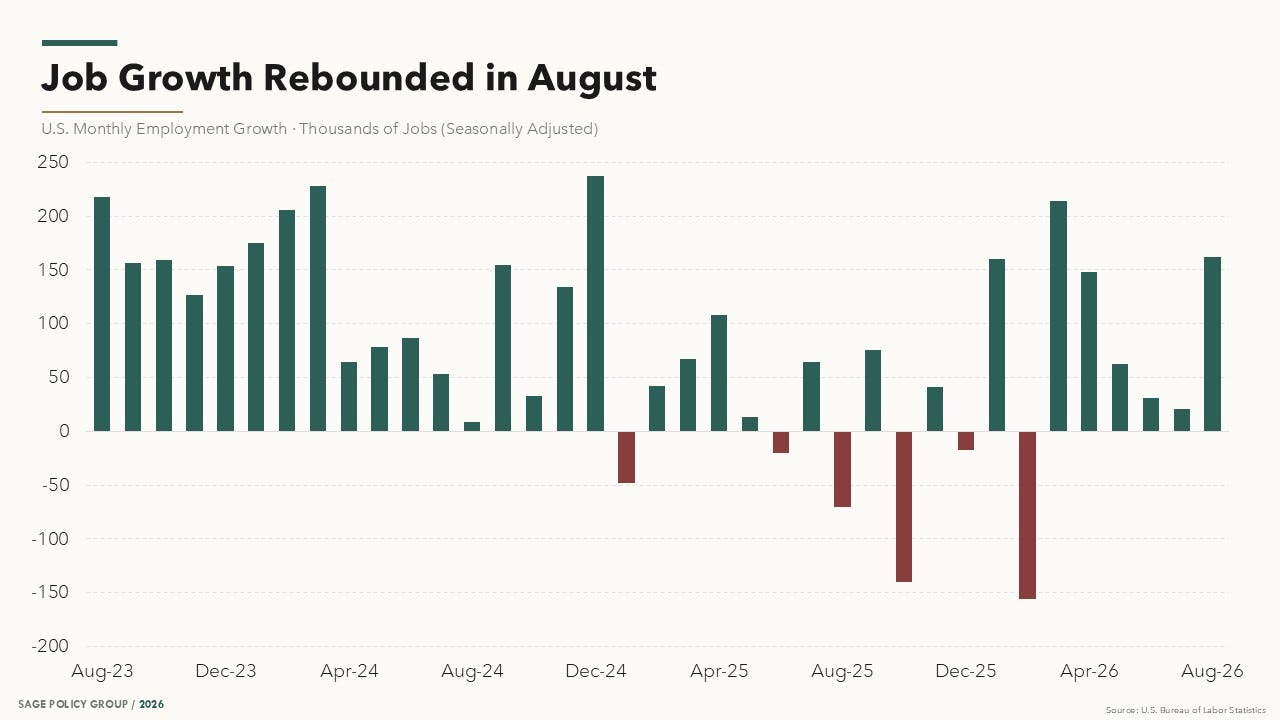
U.S. employers added an impressive 162,000 jobs in August, and the prior two months’ estimates were revised up by a combined 55,000 jobs. As you can see below, this is a nice rebound from the slower growth that occurred from May to July.
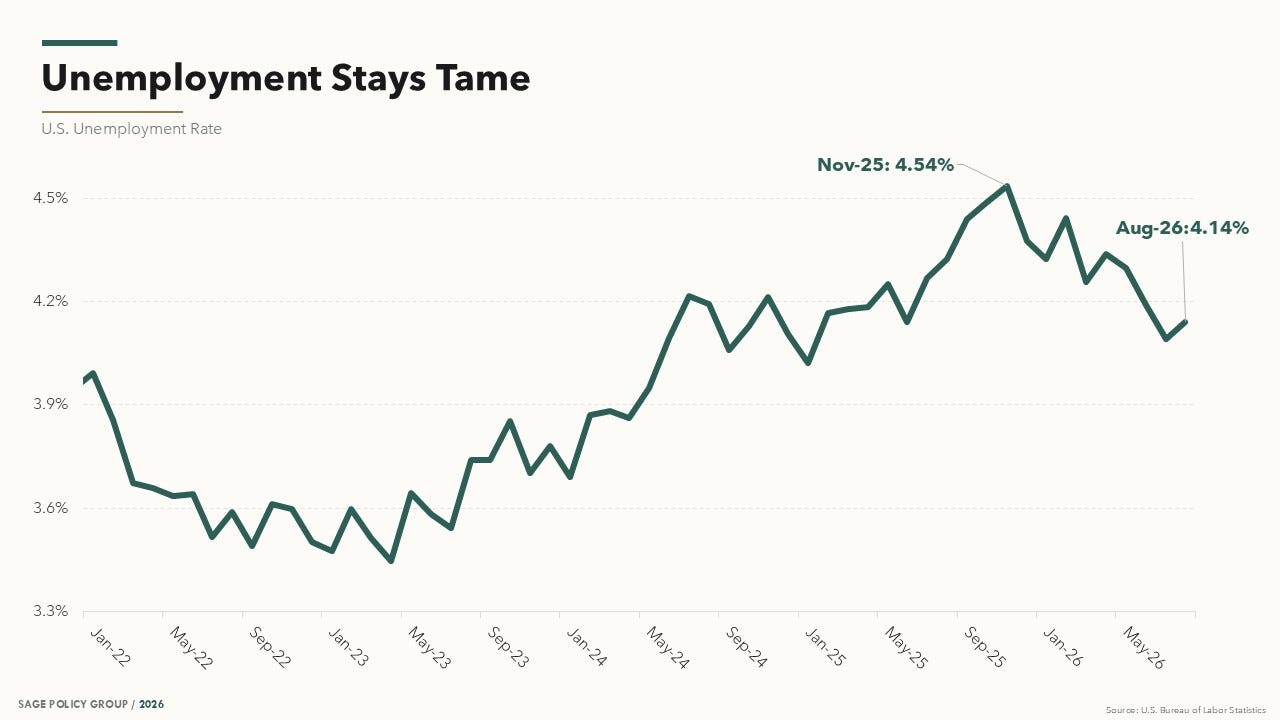
While job growth only just bounced back in August, unemployment has been improving since it reached a cyclical high of 4.5% last November. It ticked up slightly in August (from 4.09% to 4.14%) but is still low by historical standards. Nothing to worry about here.
Employment gains were ever-so-slightly broader than in previous months, though healthcare and leisure and hospitality still lead the way.
Government tacked on another 35,000 jobs for the month, and that was entirely due local governments adding 41,900 education jobs. Both federal (-5,000) and state (-10,000) government lost jobs for the month.
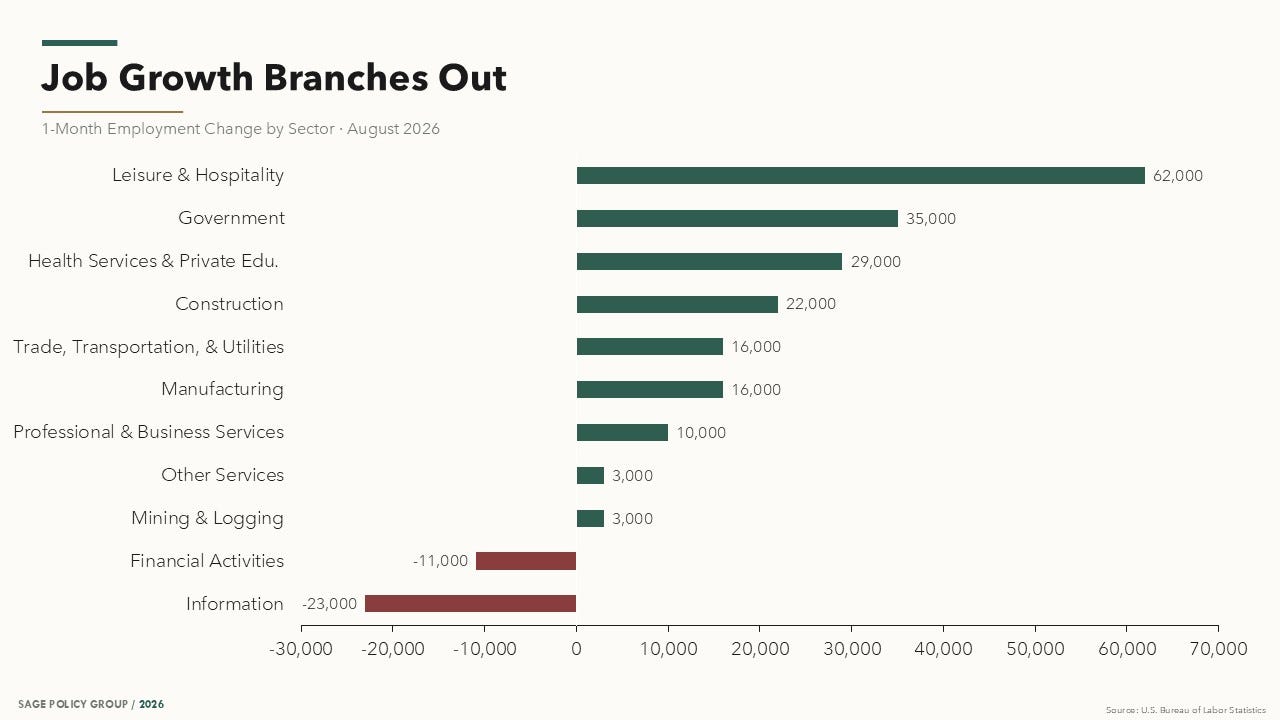
The information industry (think tech and media) lost another 23,000 jobs in August. It’s tempting to chalk the industry’s ongoing struggles up to AI, but I’m skeptical. Traditional media has been shrinking for years, and the tech sector is still pulling back from its early 2020s low-interest-rate fueled hiring binge.
Over the past year, job growth is still incredibly concentrated in the healthcare sector.
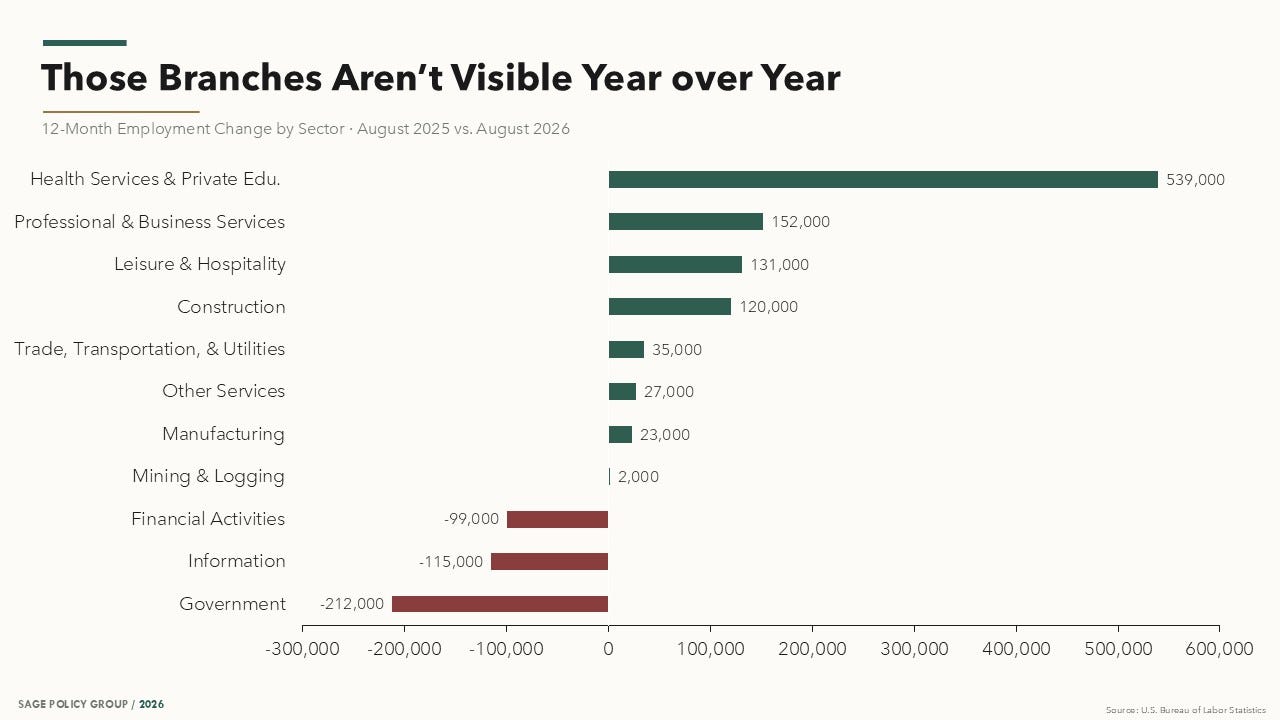
Concentrated job growth aside, there’s just not much to dislike in today’s report. If you really want to quibble, the prime age (25-54) employment-to-population ratio hasn’t bounced back after dropping sharply earlier this summer, but that would be some pretty serious quibbling.
The Big Picture
The labor market is in pretty good shape. That allows the Fed to focus on inflation. Which is to say, the odds that the Fed hikes rates at its next meeting are higher than they were before this release.
What’s Next
Anirban is currently working on Week in Review. That will be out later today and is just for paying subscribers. If that’s not you and you want it to be, just click the button below: