


We hoped this would be a quiet week for economic news and data, with little more than a few (admittedly downbeat) housing data releases. No such luck. The bond market went bonkers, diesel prices are soaring, and there’s reason to think that things will get worse from here.
And the Orioles have lost four in a row, so, not great.
Monday
NAHB Housing Market Index
Homebuilder confidence improved slightly in August, but that’s not saying much. Homebuying demand is historically low, and 35% of homebuilders cut prices during the month.
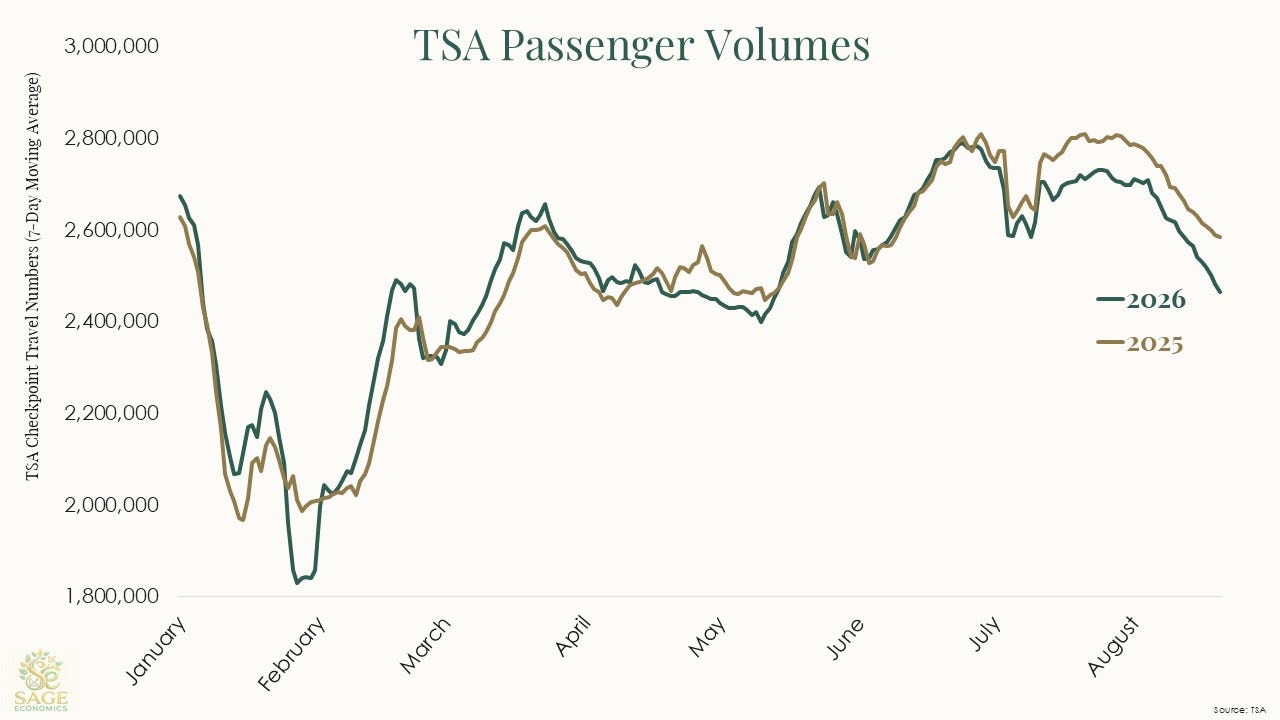
TSA Checkpoint Travel Numbers
Air travel continues to fall off, now about 5% below year-ago levels over the past week, according to TSA gate check numbers data. Not a good sign!
Oil Stuff
Gas prices rose modestly this week, up to an average of $4.18/gallon. That’s still extraordinarily high for this time of year, but also insignificant compared to this week’s bigger and badder oil-related story: the widening diesel crack spread. (Stop right there, Beavis.)
A crack spread is the gap separating crude oil prices and refined oil products. It’s at a record high for diesel. Diesel prices jumped about $0.20/gallon this week to $5.45/gallon. The record high is $5.82/gallon. It’s possible we break that over the next few weeks as the war in Iran continues right into the midterms.
This is bad news on the inflation front. Diesel is an input to virtually everything. It’s especially important for agriculture. Harvest season is approaching, and diesel prices are currently above $7.00/gallon in California, the largest agriculture-producing state.
A few thoughts:
There’s no end in sight for the Iran conflict, which is squeezing supply. This week we learned that various parties aren’t even talking.
Ukraine continues to attack Russian energy infrastructure, including refineries. That’s putting downward pressure on global supply.
We’ve largely exhausted the geopolitical shock absorbers (like the Strategic Petroleum Reserve) that were in place to soften the blow. Good news here though – China has plenty of oil in reserve. They hold the world’s largest reserves.
U.S. refineries have been running at >97% utilization rate. That makes sense; the crack spread is essentially the refiner’s margin.
With refiners essentially running at capacity, any disruption will push prices even higher.
Weather is the most typical cause of disruptions, and we’re heading into the heart of hurricane season.
There’s a super El Niño this year. Without going into the meteorological details, that makes hurricanes less likely to form in the Atlantic, so at least there’s that.
Big picture, it’s a nervy time for diesel prices, and that could be a big problem for the broader economy, including for contractors.
Tuesday
New Residential Construction
July was the best month for new housing permits since February. The increase was spread across all housing types. At the same time, housing starts plunged, down about 12% on both a monthly and yearly basis.
Housing completions also plunged to their lowest level since May 2020. We’re still finishing more units each month than before the pandemic, but that might not last too long given rising financing costs.
Pending Home Sales
Pending home sales, which are supposed to show us what actual home sales will look like in a month or two, fell in July. No surprise there. It’s a bad housing market that’s only going to get worse in coming weeks.
Industrial Production
U.S. manufacturing, mining, and utility production continues to increase, albeit at a pretty sluggish pace. Still, this is one of the indicators used to diagnose recession, so slow growth is still good.
Wednesday
The Bond Market Pops Off
