


Higher worker-related costs usually translate to higher prices so, at least on the inflation front, it’s good news that labor cost escalation has cooled considerably since the middle of 2022.
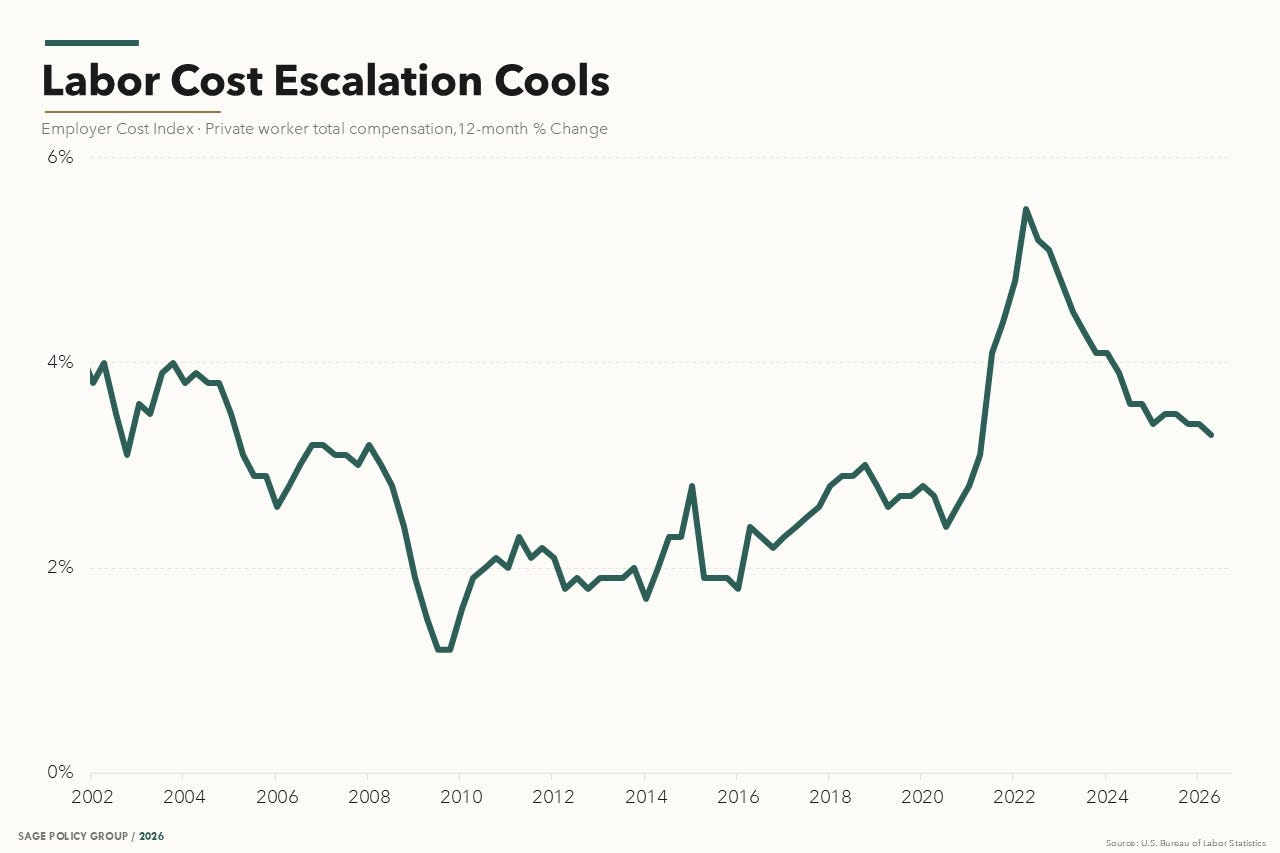
Of course, this sword cuts both ways. Yes, slower labor cost escalation relieves pressure on inflation, but it also usually means smaller pay increases for workers.
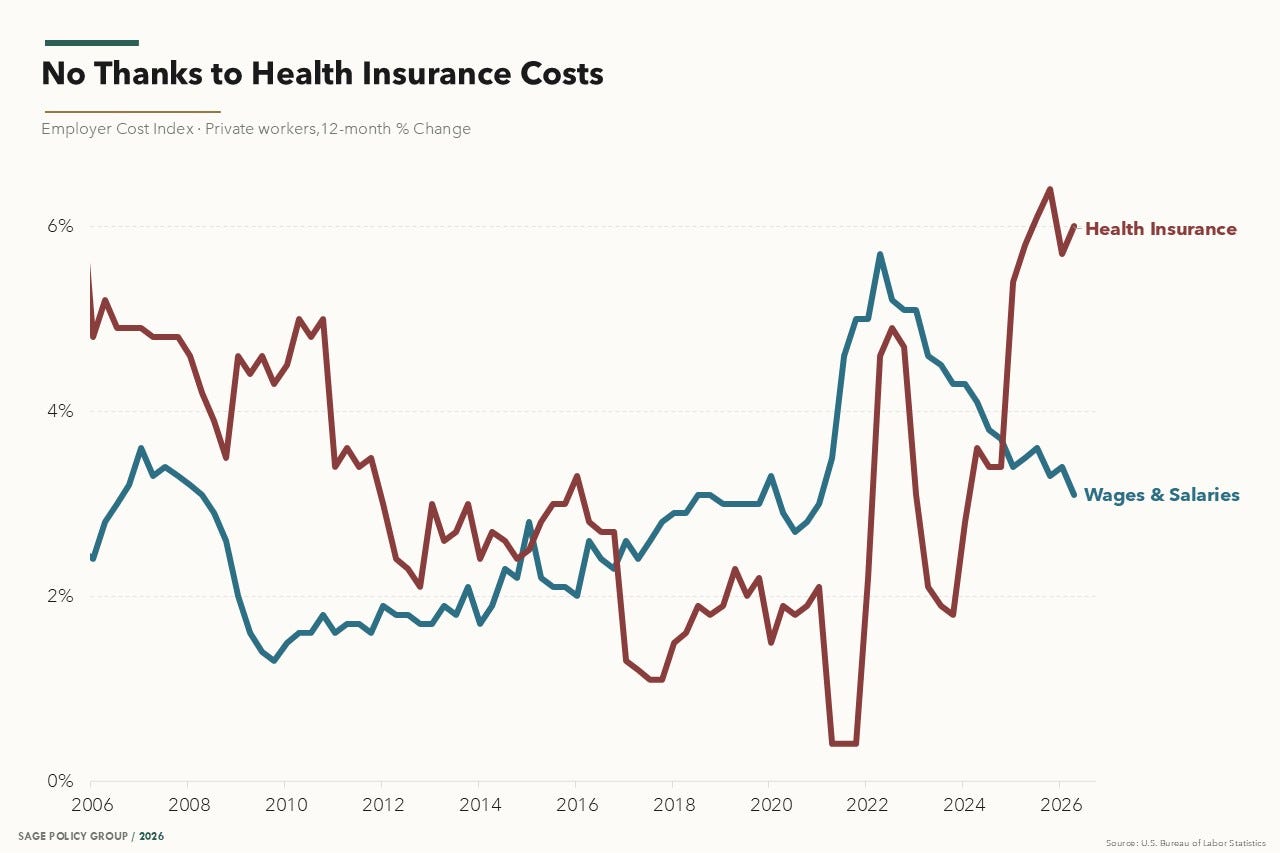
Right now, we’re getting sliced by both edges. Employment costs—which despite cooling are still up a relatively large 3.3% year-over-year—are rising almost entirely due to surging health insurance prices. Wage and salary growth has slowed to roughly pre-pandemic levels.
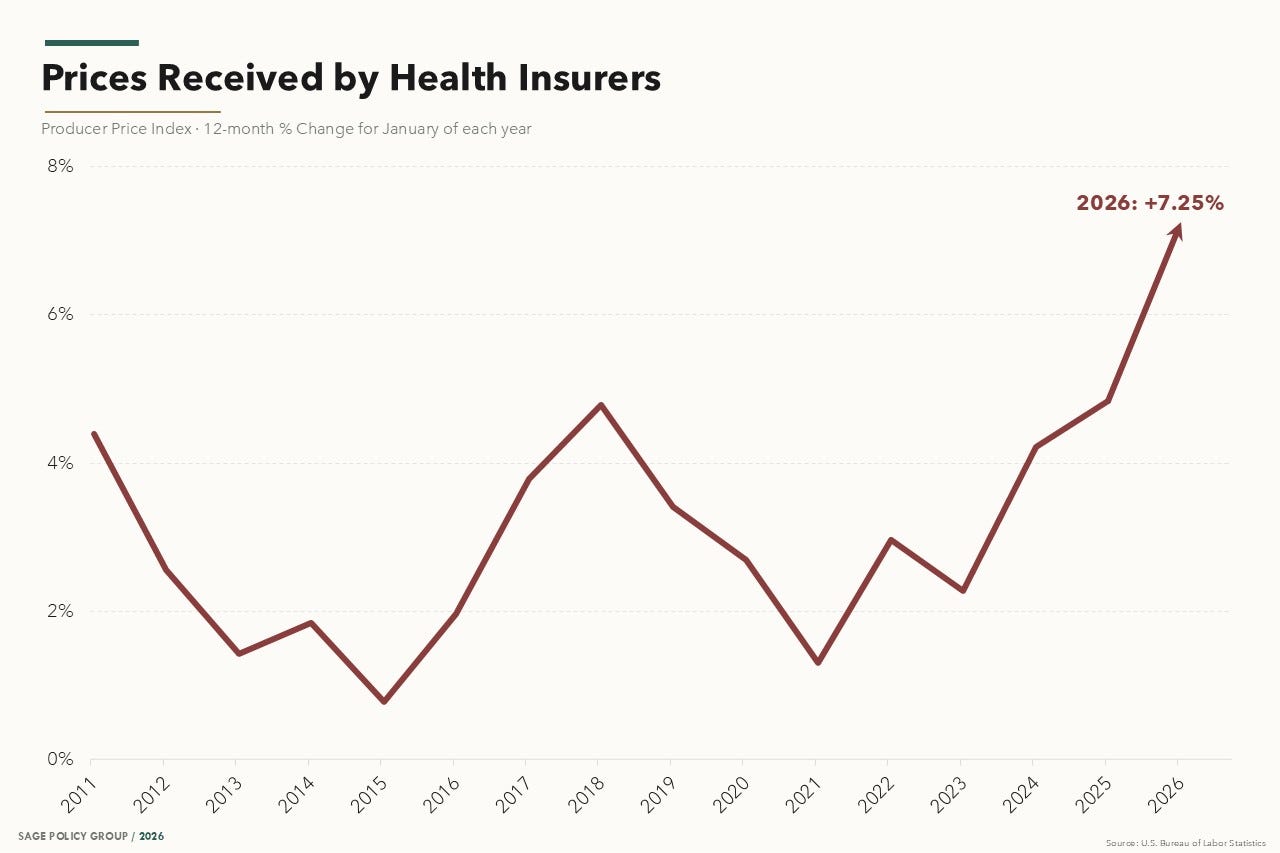
The prices received by health insurers (a slightly different measure than costs incurred by employers) jumped 7.25% from January 2025 to January 2026. That’s the largest annual increase in at least 15 years.
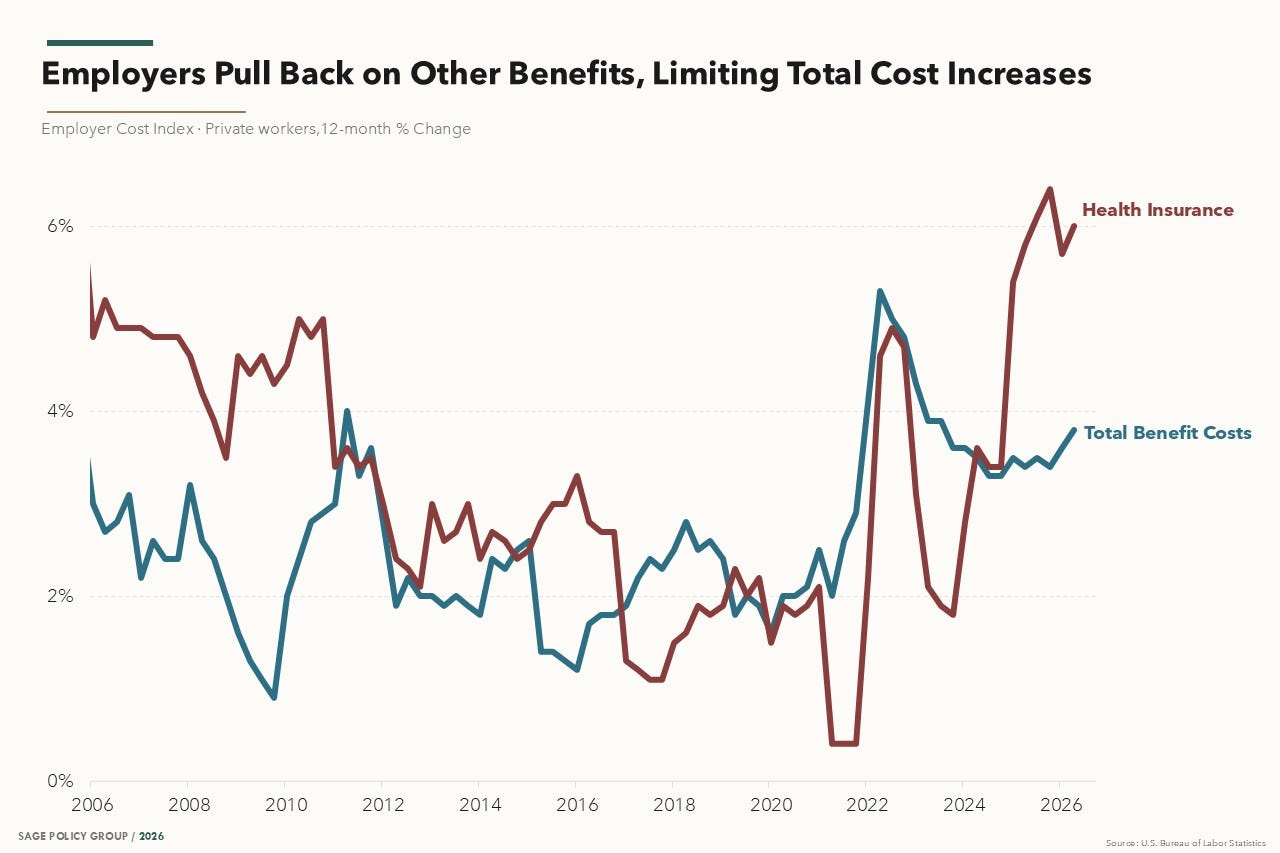
About 4 in 10 employers have cut spending on other benefits in response to rising health insurance costs, according to this Mercer survey. As a result, total employer benefit costs have risen at a far slower pace than health insurance costs.
Two-thirds of employers are planning to raise the percentage of health insurance premiums paid by their employees in 2027, further reducing net compensation.
Which is to say, both employers and employees are taking higher health insurance costs right on the chin.
This isn’t getting better anytime soon
Employers expect medical plan costs to increase another 10% in 2027, according to IFEBP. What’s driving the increase?
There are a few smaller factors at play—like increased mental health utilization, an aging workforce, and AI’s ability to help providers more efficiently submit claims—but those are fairly minor compared to the two big cost drivers.
First: prescription drug costs are a substantial cause of cost increases, with none bigger (or newer) than GLP-1s (e.g., Ozempic). Just 3% of U.S. adults used a GLP-1 for weight loss in 2024, according to Gallup, but that share shot up to 11% in 2026.
About half of all large employers covered GLP-1s in 2025, according to the aforementioned Mercer survey, but 6% are dropping it in 2026 and another 5% plan to do so in 2027.
Second: catastrophic claims are an even bigger driver than prescription drugs. While the cause of these massive claims (cancer, pre-term birth, rare genetic conditions, etc.) aren’t increasing in frequency, the costs they generate are.
Million-dollar claims rose 46% from 2022 to 2025, according to Sun Life. That has a little bit to do with inflation and a lot to do with new treatments.
Consider Elevidys, a gene therapy used to treat Duchenne muscular dystrophy that costs $3.2 million for a single infusion. It doesn’t take many $3.2 million treatments to drive up insurance costs across the board.
To be clear, it’s good that we’re coming up with new treatments and therapies. Good, but expensive.
Final thoughts
Health insurance costs are going to keep increasing over the next few years. Employment costs will continue to rise at a faster-than-ideal pace, and employers will keep trimming benefits, shifting costs to employees, giving smaller raises, and bumping prices as a result.
What’s next
We’re sending out our Q&A post on Thursday. Next up after that is Week in Review, our every-Friday post that covers all the economic news and data in a breezy, five-minute read.
Week in Review is only for paying subscribers. If that’s not you and you want it to be, just click the subscribe button.