


The American Pyrotechnic Association’s factsheet on juvenile firework injuries opens with, “Children between the ages of 5 and 18 are by nature adventurous & experimental; thus much more likely to take risks.”
Not the most reassuring way to start a primer on youth firework accidents, but to the APA’s credit, firework safety has improved dramatically over the past 50 years.
By weight, firework use is up more than 1,000% since the mid 1970s, while firework injuries have risen just 17%.
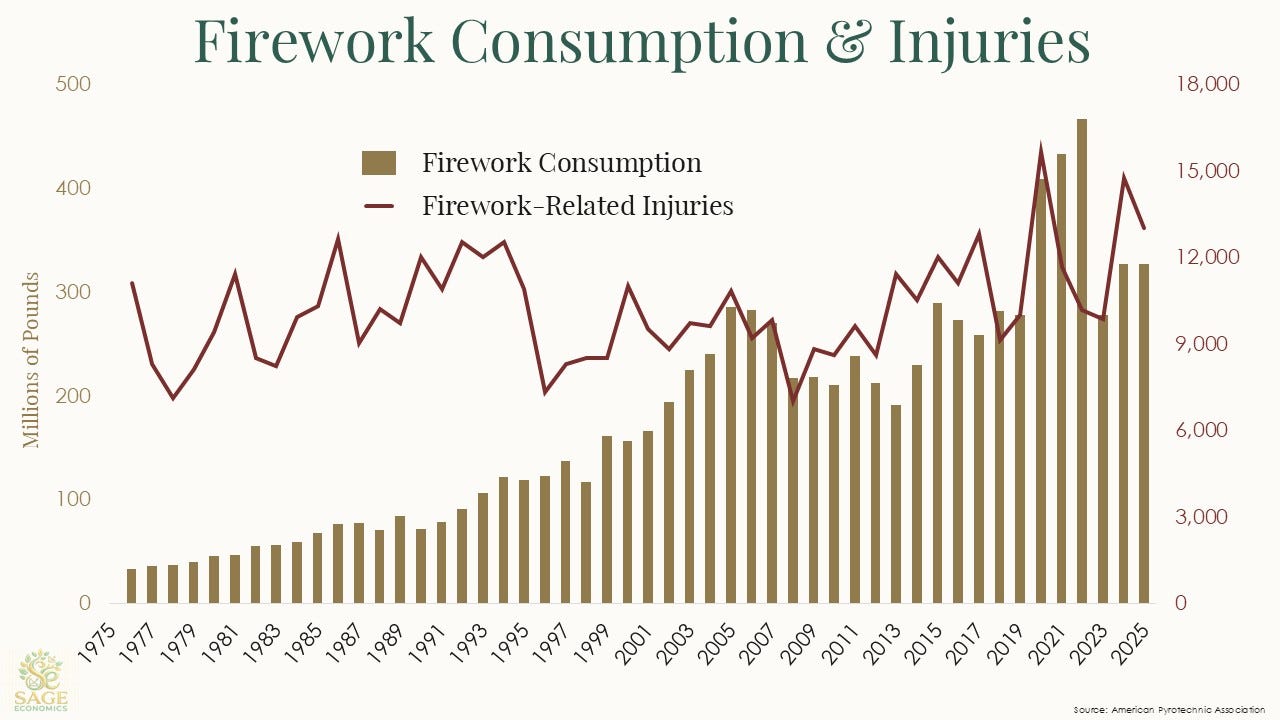
This growth has propelled industry revenues from about $610 million in 2000 to $2.95 billion in 2025. Revenues will almost certainly exceed $3 billion in 2026 given the country’s 250th anniversary and tariff/inflation cost pressures.
To put a $3 billion industry into context, that’s about what Americans spend on porta potty rentals each year. The bowling alley industry is about 50% larger.
The domestic pyrotechnic industry is mostly about selling them and setting them off. We imported $589 million of fireworks in 2024, about 95% of that from China, while exporting just $92 million.
To the extent we do manufacture fireworks, it’s primarily professional-grade display products. The bottle rockets and roman candles you buy on the side of the road almost certainly come from China.
If those seem more expensive than they did a few years ago, it’s not your imagination. We currently levy a 30% tariff on firework imports from China, much to the National Fireworks Association's displeasure.
What’s Next?
We’ll have a post covering tomorrow’s jobs report. After that it’s Week in Review, our every-Friday post that gives you everything you need to know about the economy in a breezy, five-minute read, either on Thursday afternoon or Friday morning.
Week in Review is just for paying subscribers. If that’s not you and you want it to be, just click the button below:
How do you think the consumption will be this year inregards to the 250 celebrations? Or will the injury part spike more?