


Voters want lower tax rates, not necessarily fewer government services. Time to see how Floridians react to getting both.
Florida’s Amendment 3 raises the homestead exemption—the value of a primary residence exempt from property taxes—for non-school taxes from about $76,000 in 2026 to $150,000 in 2027 and $250,000 in 2028 (after that it’s indexed to inflation), and it was approved by voters last week with about 62% of the vote.
The amendment, which also lowers the cap on annual assessment growth for non-homestead property from 10% to 5% and does a few other things, will exempt nearly a quarter of the statewide non-school property tax base by FY 2028-29. The impact on small, rural counties will be particularly massive.
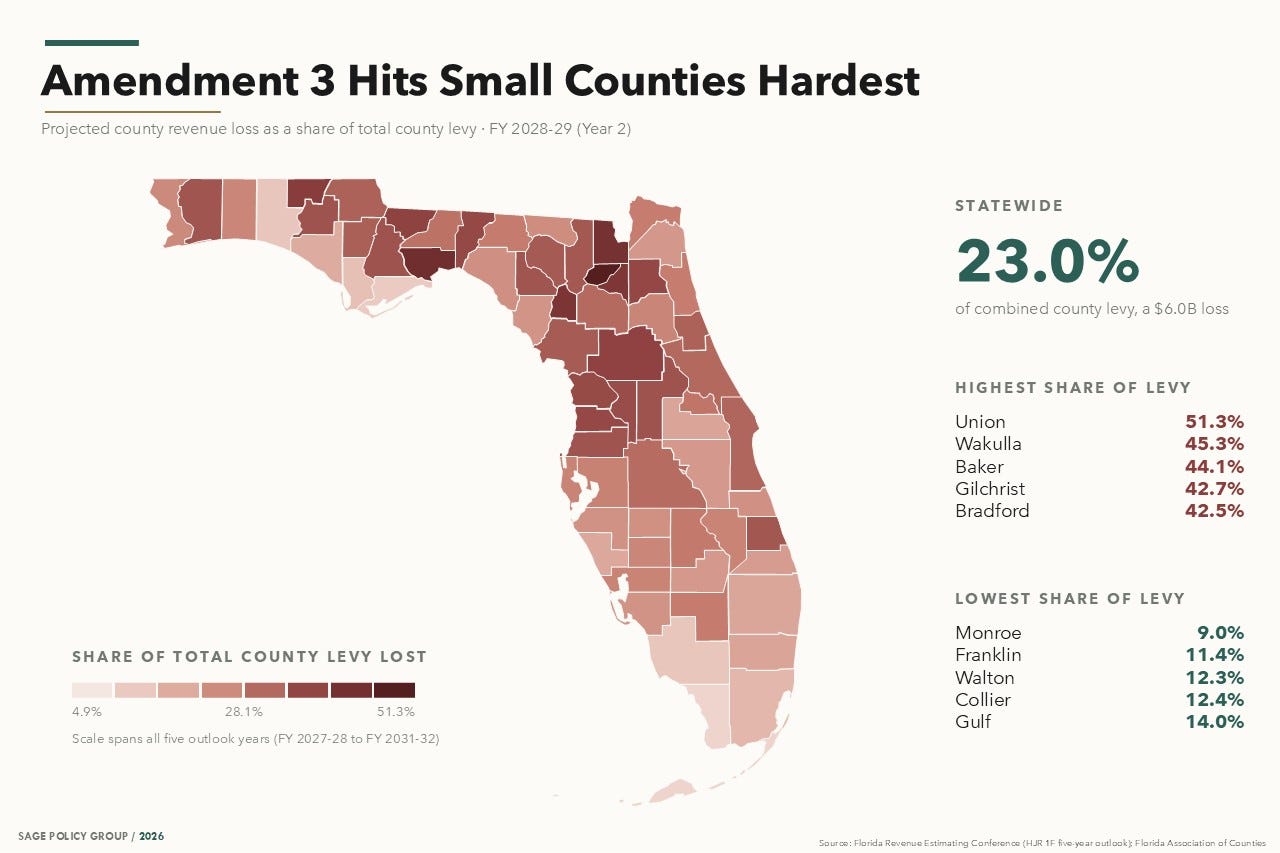
Let’s start with Union County, where the median assessed value of a home is $89,061, meaning that a house worth nearly three times the countywide median will be fully exempt from non-school property taxes.
That exemption will result in a 50% loss of non-school tax revenues by FY 2028-29. To replace those lost revenues, the County would have to roughly double its current property tax rate of 1.0%.
Except it can’t, because Florida’s constitution caps county operating property taxes at 1.0% (10 mills).