


Tomorrow is the one year anniversary of Liberation Day. To commemorate one of the most impactful economic policy announcements of the past century, here’s a post on…the economy-rattling effects of the ongoing conflict in Iran.
Where We’ve Seen Fallout
Iran effectively closed the Strait of Hormuz on March 2nd. The number of tankers passing through went from about 95 per day in February to less than 5 per day since the closure.
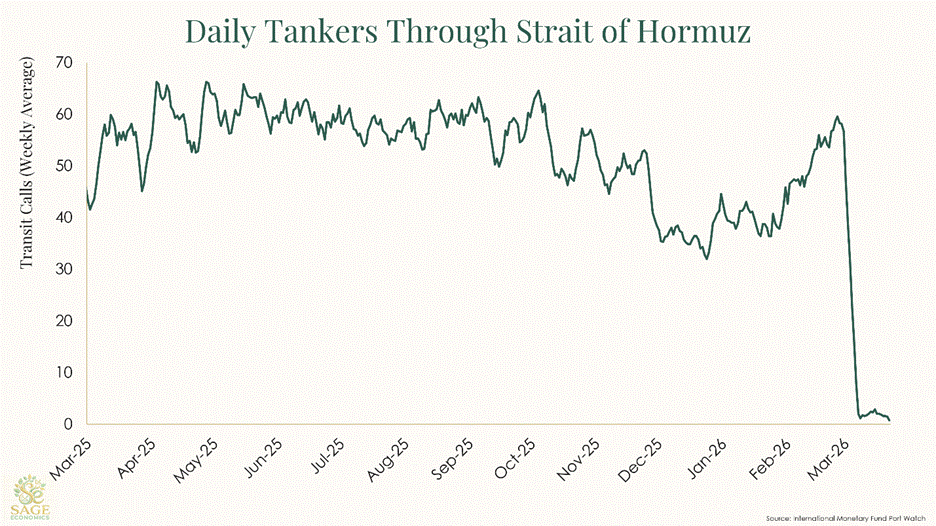
About a quarter of all seaborne oil passes through the Strait. Or it did, anyway.
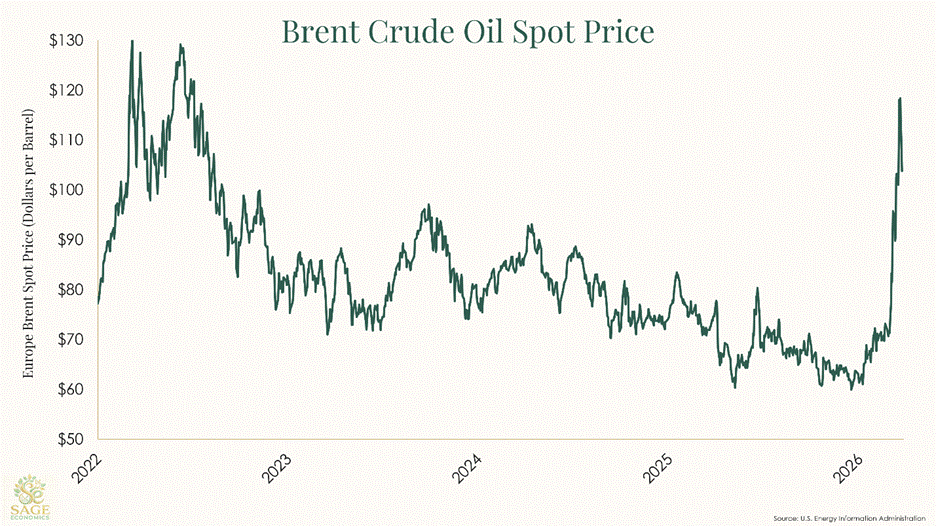
This massive supply shock caused oil prices to blast off, returning to levels not seen since 2022.1
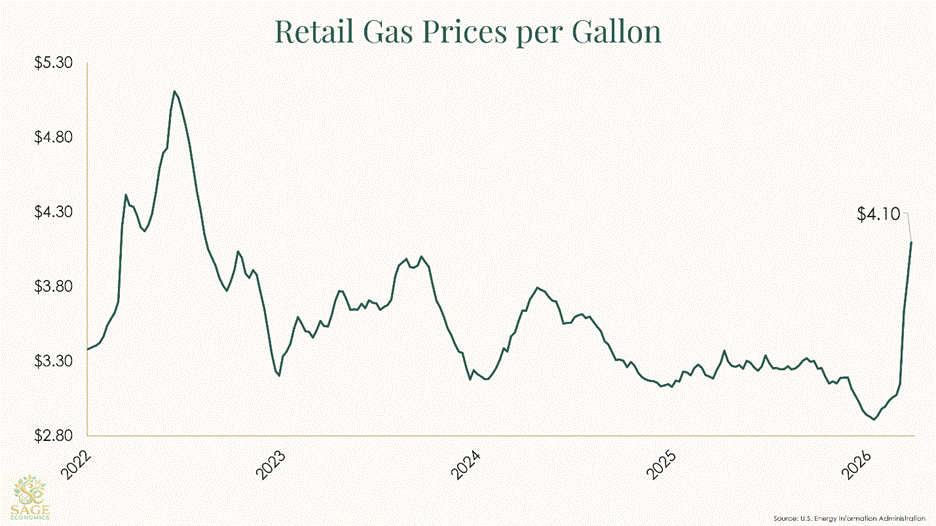
U.S. gas prices surged and are up more than $1 per gallon since the start of the conflict.
Americans buy 375 million gallons of gas per day, so that’s an additional daily cost of $375 million. Per person, that amounts to about $50 per month or an additional $600 per year.
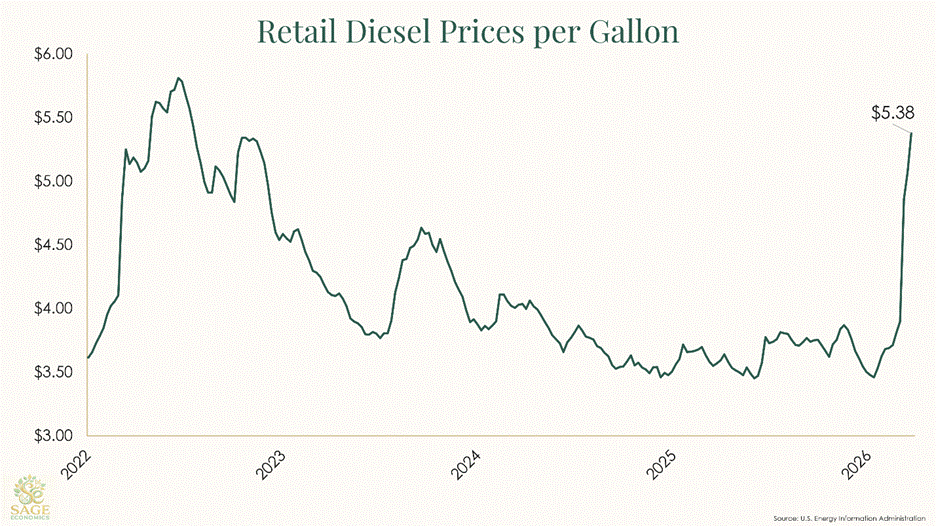
The type of oil moved through the Strait of Hormuz is heavily weighted toward the kind used for diesel and jet fuel, causing even sharper prices increases for these products.
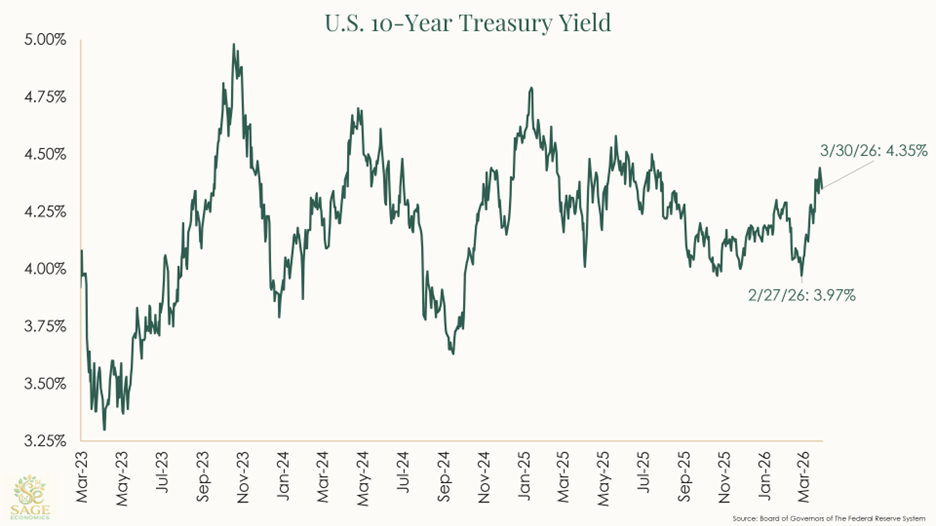
Greater uncertainty and higher inflation expectations pushed 10-year treasury yields about 0.4 percentage points higher.
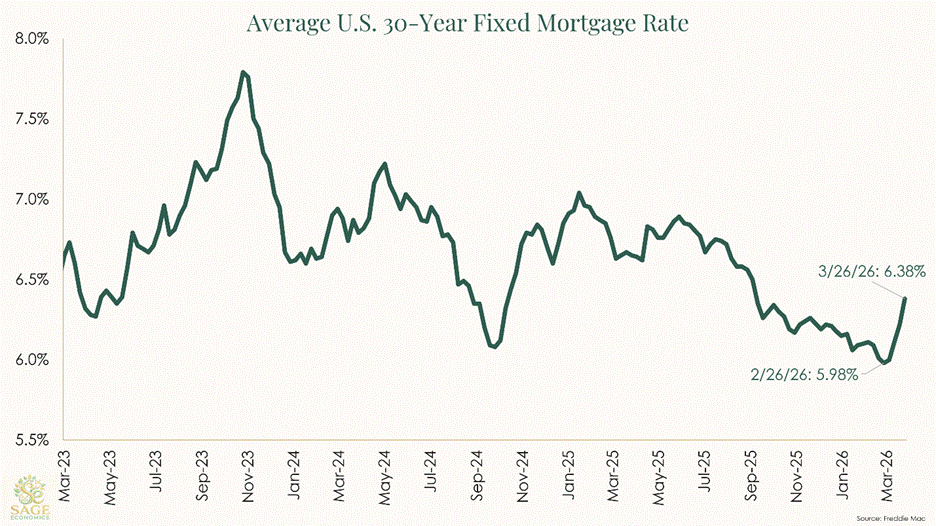
That caused mortgage rates, which had finally slipped below 6.0% for the first time since 2022, to spike. More increases are likely over the next few weeks.
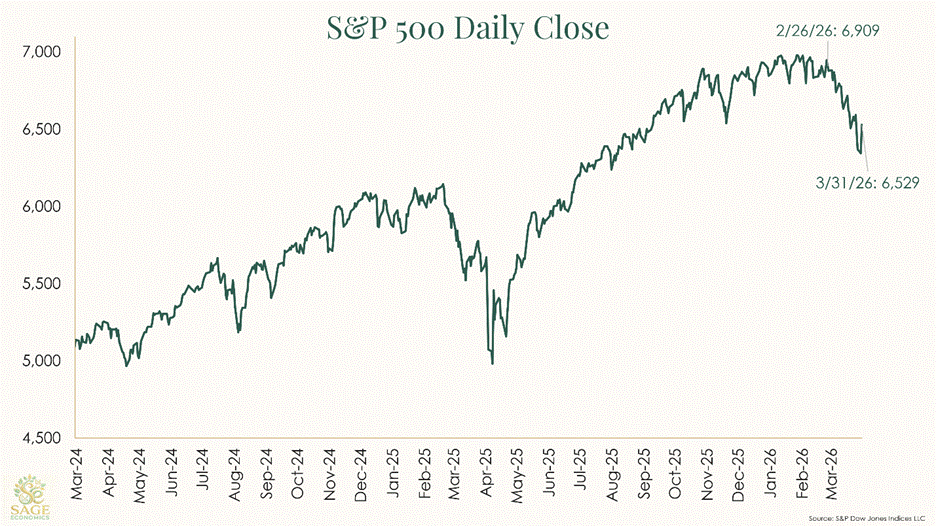
Stocks mounted a shockingly orderly retreat, falling steadily throughout March without dropping more than 2% on any single day. They rebounded yesterday (March 31st), rising nearly 3%, and are up again this morning.
Where We Have Not Seen Fallout
Most U.S. economic data. Not because there won’t be fallout. Data for March just hasn’t been released yet. Notably, there are early indications that inflation will come in scorching hot for the month.
So that’s something to look forward to.
What We Know From 2022
Inflation was already boiling to a 40-year high in when Russia invaded Ukraine in early 2022, so it’s hard to tease out the specific impacts of the supply shock. That said, spending at gas stations is going to rise sharply.
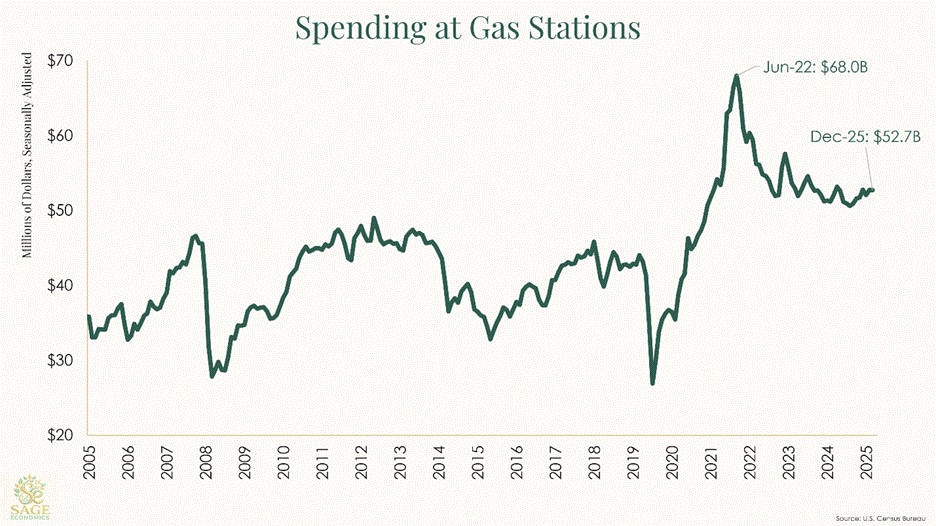
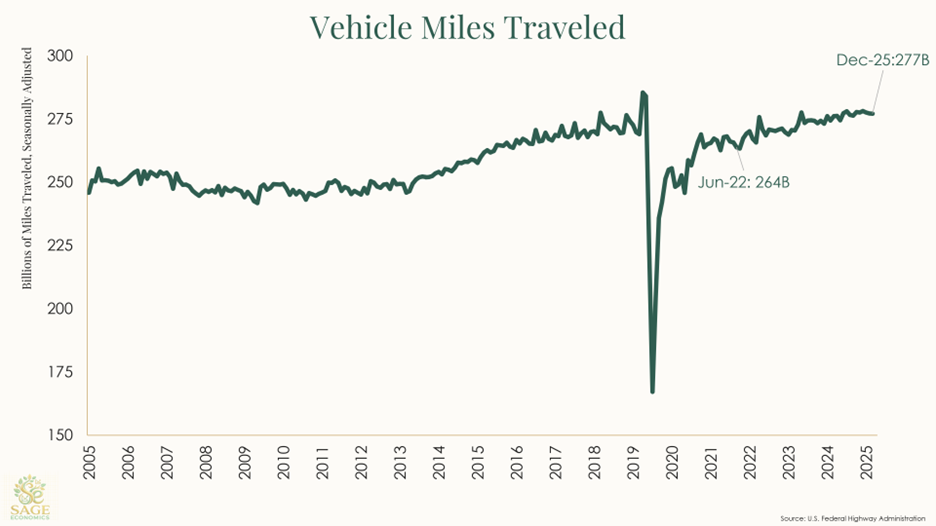
That massive increase in gas station spending during the Summer of 2022, when gas spiked to more than $5.00/gallon, came at a time when the economy was still partially shut down. We drove 127 billion fewer miles in 2022 than we did in 2025.
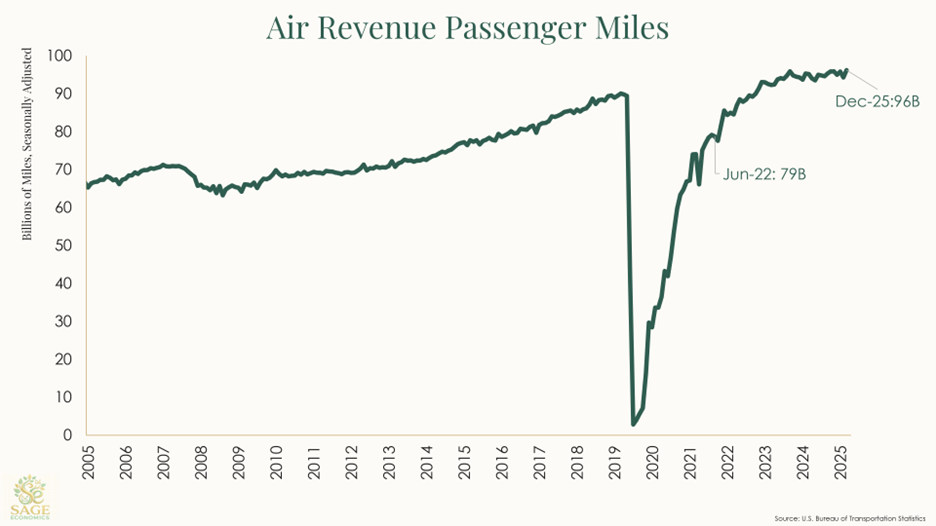
The increase in air passenger miles has been even sharper since 2022.
Critically, oil prices quickly moderated during the second half of 2022.
What’s Happens Next?
Asia is already experiencing acute fuel shortages. Europe is next. The U.S. is probably still a few weeks from feeling the full force of the supply shock.
The severity of the economic fallout hinges on how long the Strait remains closed. When will it reopen?
I don’t know. Nobody knows. Read some tea leaves. Slaughter a goat and search the entrails. Scroll through President Trump’s Truth Social feed.
Better yet, watch his address tonight at 9PM ET for “an important update on Iran.”
This announcement could be the boots on the ground scenario President Trump hinted at on Sunday. Or it could be a unilateral deescalation that leaves Iran with control of the Strait, as he suggested to his aids on Monday.
Or it could be something else entirely.
Who’s Right?
Markets have remained, all things considered, exceedingly calm. Energy industry executives and analysts have not. Hopefully markets are right.
Looking Ahead
Next up is Friday’s critically important BLS jobs report, followed shortly after by Week in Review, our every-Friday post that covers all the economic news and data from the week in a breezy, five minute read.
Week in Review is only for paying subscribers. If that’s not you and you want it to be, just click the subscribe button.
The decline today is (mostly but not entirely) due to the front-month contract rolling from May to June.
What a chart, what silliness