


Construction Trend Tuesday covers one (hopefully) interesting industry trend in a quick, two-minute read. You can access the archive of CTT posts here.
Construction spending on houses of worship has surged since the start of 2022, rising 115% from that multi-decade low.
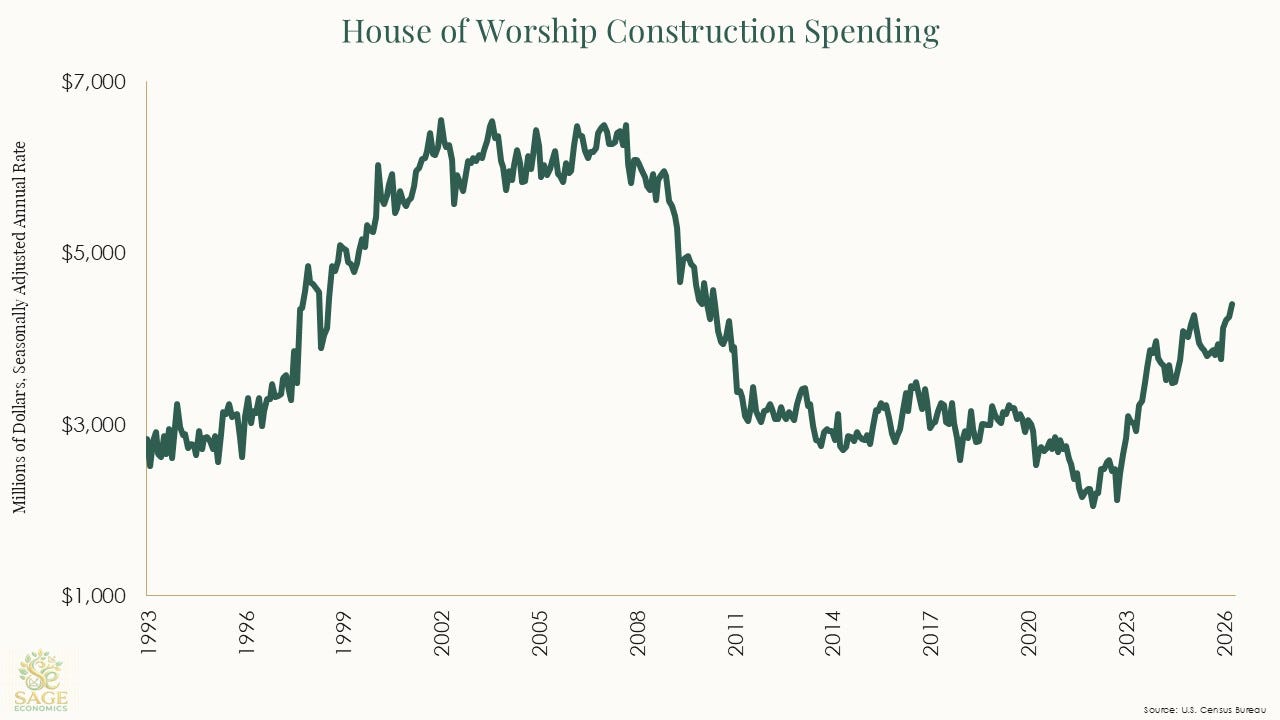
We’re still investing about one third less in houses of worship than we were in in the 2000s, and that’s in nominal terms. Inflation-adjusted spending in the category is far below that peak.
Even so, it’s an impressive rebound.
What’s driving the increase? The Washington Post thinks it’s a combination of migration patterns, churches opening smaller satellite sites, and renovations that were delayed during the pandemic, among others factors.
They also point to new laws that make it easier for religions to build affordable housing on their land. We’re skeptical that would show up in the religious category, though it’s possible that these residential developments allow for greater investment in associated houses of worship.
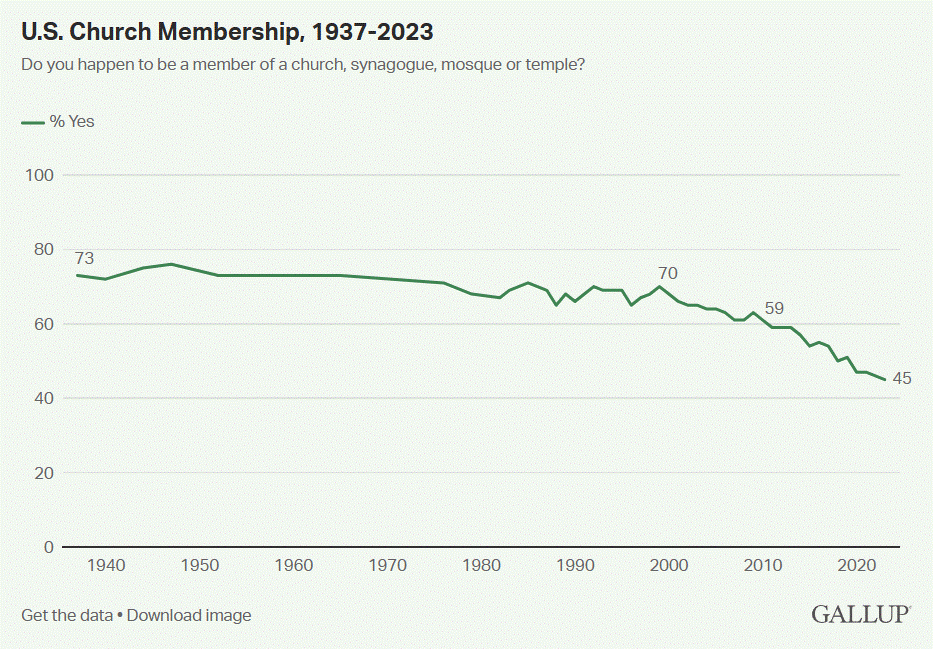
Could the rebound be driven by increased religiosity? It seems unlikely. Yes, there’s been a small increase in self-reported church attendance, but church membership continues to decline.
A final possible explanation: church-to-other-use conversions have become more popular (in Baltimore churches have been converted into apartments and even a brewery in recent years ). That activity shouldn’t count as religious construction spending in the Census Bureau’s data, but it’s possible that some small portion of it is being misclassified.
What’s Next
Next up is Week in Review, our every-Friday post that covers all the economic news and data in a breezy, five minute read.
Week in Review is only for paying subscribers. If that’s not you and you want it to be, just click the subscribe button.
Can we call it a revival?