This was a slow week for economic news and data releases; even a resumption of the conflict in Iran didn’t cause too much market excitement. Slowness aside, we learned more about slumping travel, weak home sales, the trade deficit, the Fed’s internal debate, the share of 30-year-olds living with their parents, and more.
Monday
ISM Services PMI
The services side of the economy grew in June, same as it has every month for the past two years, according to this survey of the segment’s purchasing managers. The prices component of this measure increased at the slowest pace since February, which is nice, but it still suggests rapid price increases. That’s a bad sign for inflation.
Oil Stuff
Both gas and diesel prices fell again during the week ending July 6th, but given that the ceasefire in Iran is over, we’ll see if that continues. Oil prices haven’t been particularly bothered by the resumption of hostilities, hovering in the low $70/barrel range.
TSA Checkpoint Travel Numbers
It’s been a disappointing summer travel season so far, with TSA gate check numbers modestly below year-ago levels around the July 4th holiday.
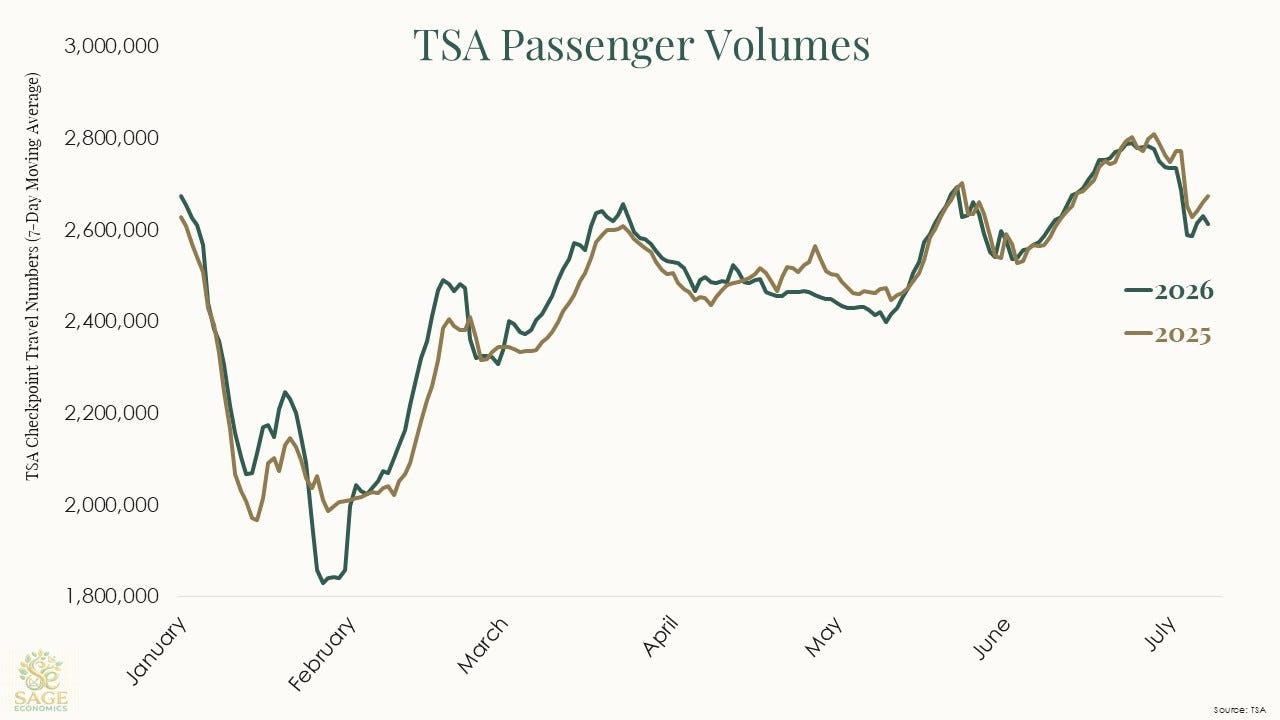
The optimistic take is that 2025 was a record year for summer travel and, given high prices, a modest decline isn’t so bad.
The pessimistic take is that travel volumes are below expectations, especially given the World Cup, and this is a pretty clear sign that consumers are pulling back in the face of high prices.
Tuesday
The Trade Deficit
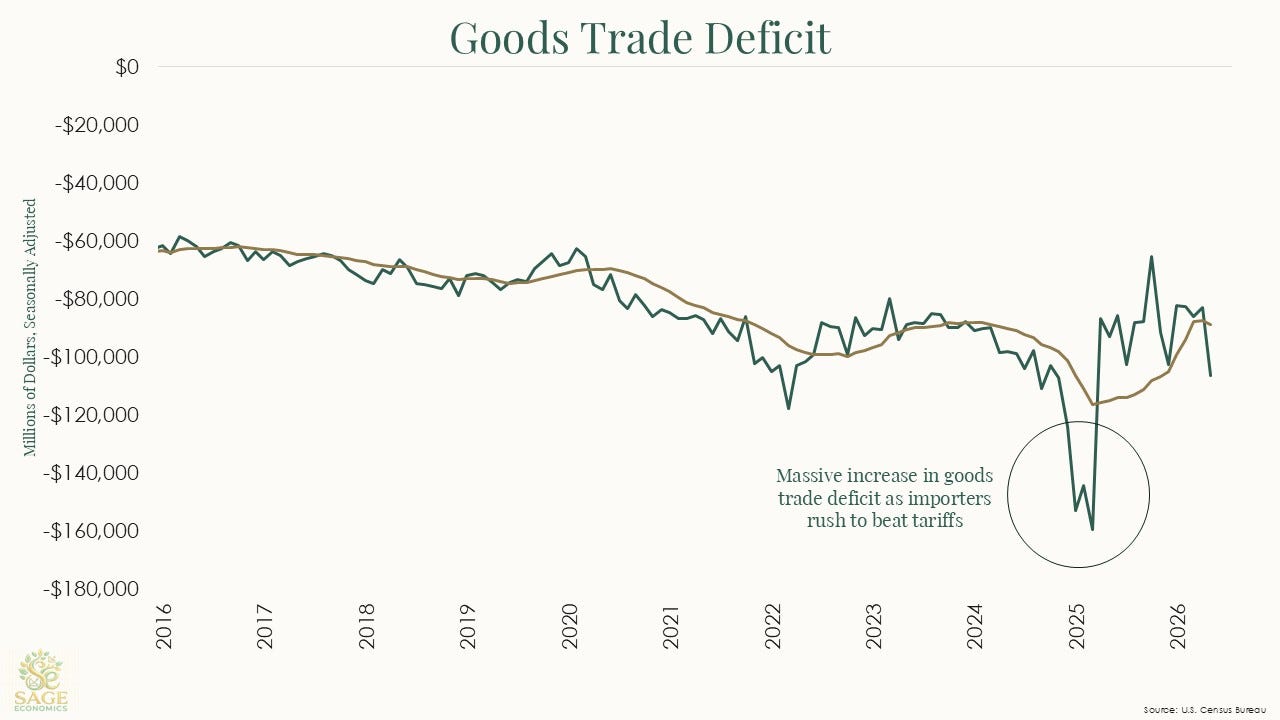
The trade deficit surged in May 2026 due to record high imports. What drove the increase? Data centers, of course. Data center equipment is really expensive and we’re buying a ton of it. Computer accessory and semiconductor imports accounted for 18% of the monthly increase.
It wasn’t all data centers, though. Imports of pharmaceuticals and consumer goods also made a sizable impact. A sharp drop in gold exports—precious metal trading has been volatile over the past several months—also contributed to the widening trade deficit.
The big takeaway here is that however much the White House wants to close the trade deficit, that priority is taking a back seat to the AI build out.