


Both Nissan and Toyota have warned of shortages of certain motor oils. Even if your car uses those oils, you’ll still be able to get a change, it just might be with a higher weight oil (not ideal for some cars) and/or at a higher price.
Which is to say, oil-market-induced pain isn’t limited to gas stations.
On the data front, this week brought us some updates on inflation (hot hot hot!), retail spending, small business optimism, and more.
Monday
Existing Home Sales
Sales of existing homes (i.e., not newly built) inched 0.2% higher in April, but they’re still really low. The better news is that inventory increased to the highest level since last October, but it’s still a pretty bleak housing market.
Oil Stuff
The Strait of Hormuz is still closed and oil prices are still above $100/barrel. Gas prices are, unsurprisingly, still rising, up to an average of $4.63/gallon during the week ending May 11th, while diesel prices stayed put at $5.64/gallon.
TSA Checkpoint Travel Numbers
Air travel volumes remain down on a year-ago basis. The best thing we can say about this is that the situation isn’t getting worse (at least not yet).
Tuesday
Consumer Price Index
Consumer prices surged for the second straight month in April. While that had a lot to do with rising energy prices, core inflation (excludes food and energy) also came in way too hot, increasing at the fastest pace since January 2025.
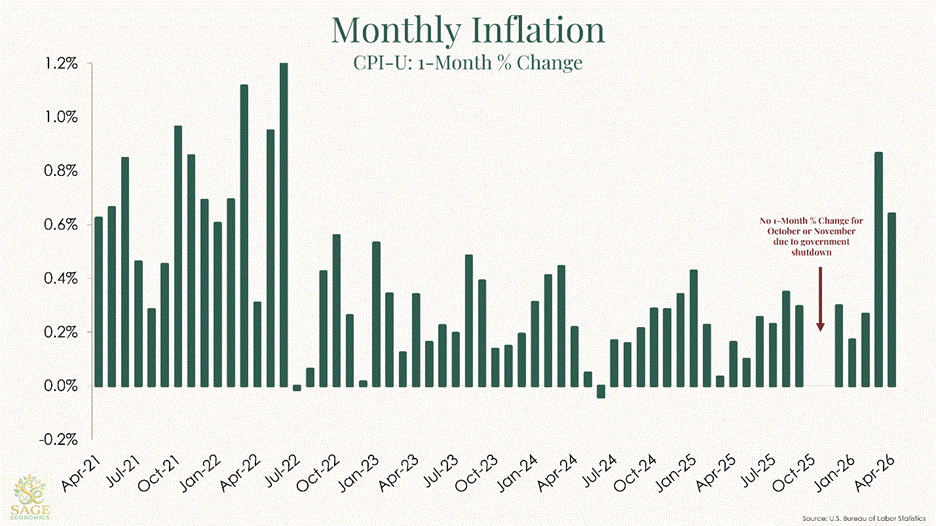
Consumer prices are now up 3.8% over the past year. That’s the largest annual increase since 2023.
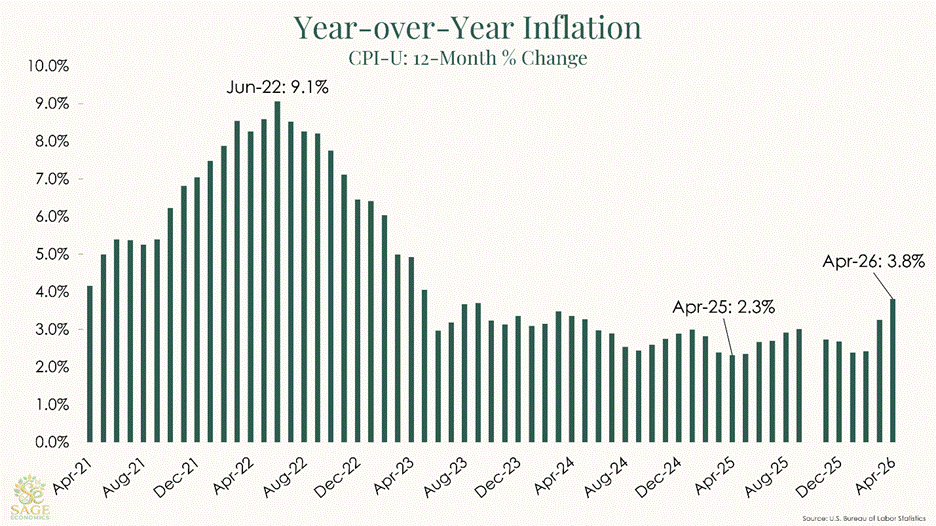
It’s pretty clear we’re moving in the wrong direction on the inflation front, and rate hikes now appear more likely than rate cuts in 2026.
NFIB Small Business Optimism Index
This measure of small business confidence rose slightly in April but is still pretty low by historical standards.
The most interesting part of this release is the comments, specifically regarding how owners are struggling to find both skilled and unskilled workers. The labor supply looks to be tightening again. To the extent that boosts labor costs, it’s bad news on the inflation front.
