


People just do not like the economy right now. Consumer sentiment is worse than during the 2008 financial crisis and way worse than during the early months of the COVID-19 recession.
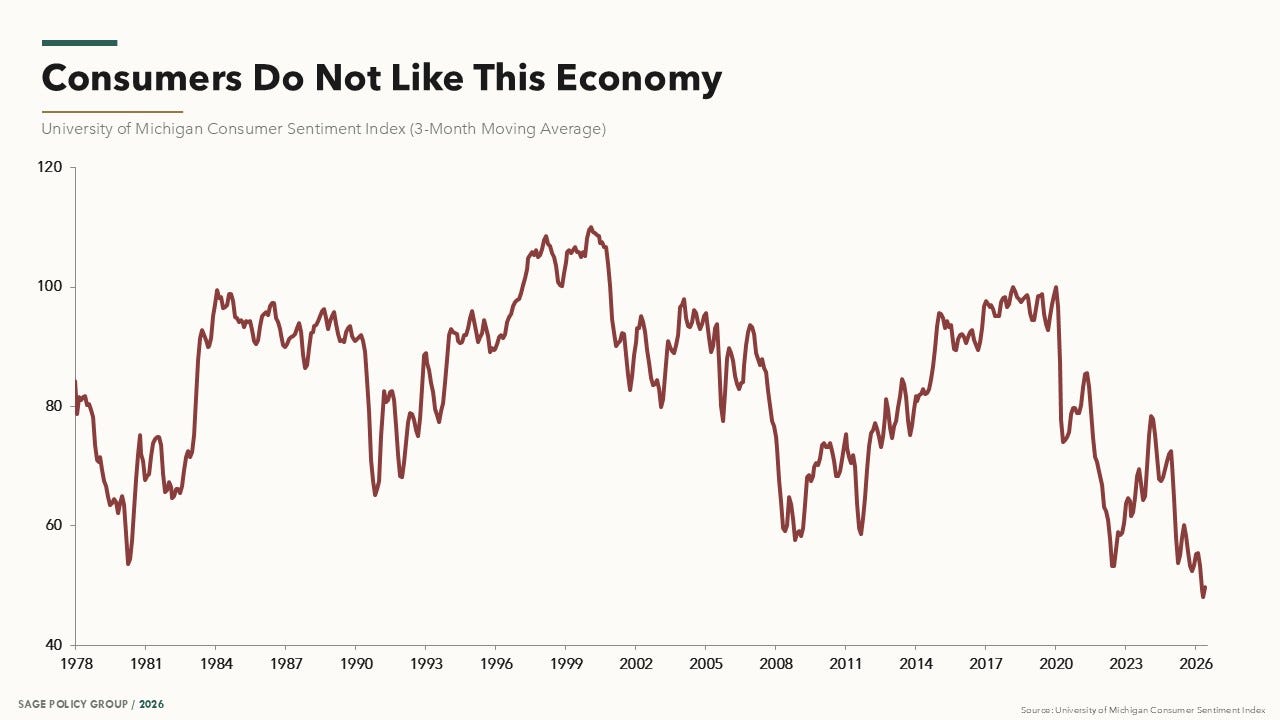
Both of those times were objectively worse from an economic standpoint. Unemployment is just 4.1% right now. It was at least twice that high over a 42-month stretch from early 2009 to mid-2012 and soared to nearly 15% (!!!) in early 2020.
This discontent is broadly shared across demographics. Democrats? Not happy. Republicans? Also sad. Old? Young? College educated? GED? Doesn’t matter. Everyone’s upset.
[Okay, rich people are slightly less upset, but that’s to be expected.]
The vibes are bad, as the kids would say, but they’re not inexplicable.
Part 1: Inflation
People hate inflation. Can’t stand it. Look at that consumer sentiment chart above. The only other time it’s been this bad was 1980, when prices were rising at a nearly 15% annual rate.
This doesn’t need too much explanation. Rapid inflation makes us poorer. Nobody likes being poorer.
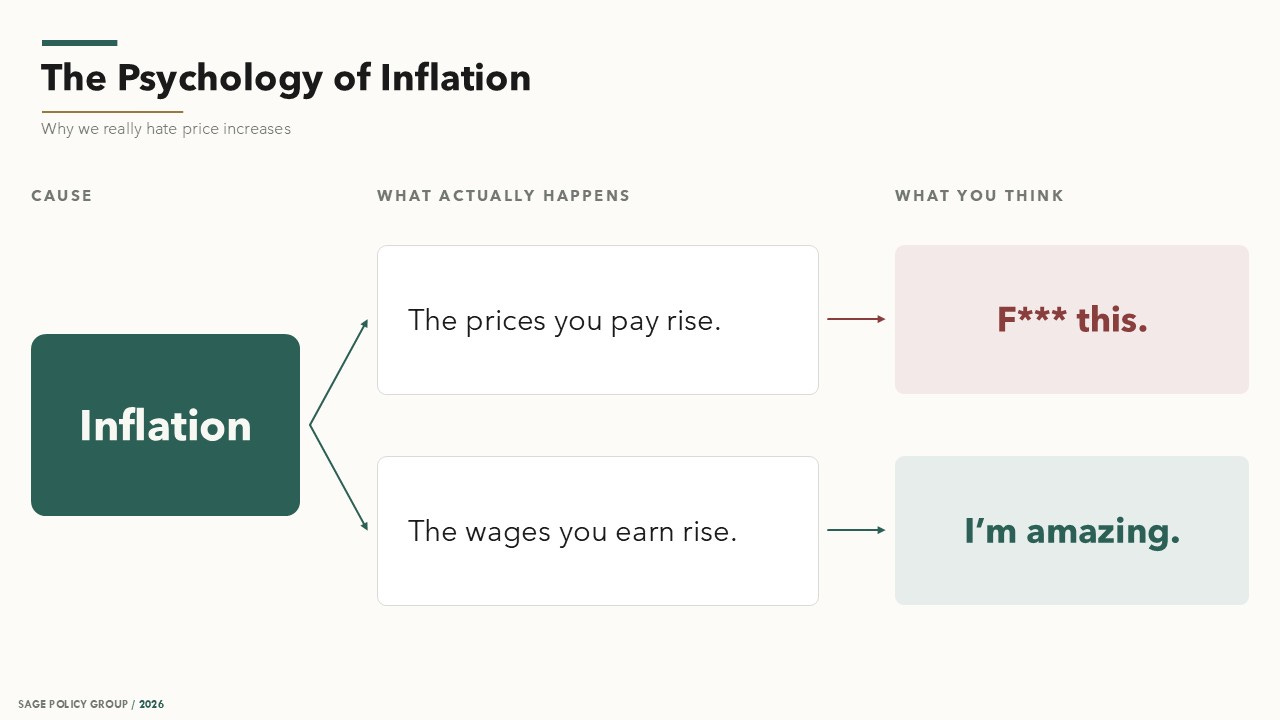
It is worth noting, however, that people hate inflation even when it causes their personal earnings to rise faster than overall prices. To be clear, that was pretty common in 2022. Take job switchers. Inflation peaked at a 9.1% year-over-year pace in 2022, while the median job changers’ pay increased at a roughly 16% annual rate.
The psychology at play here: when you get a raise or a new higher-paying job, that’s all you. When the prices you pay rise, that’s on someone else (corporations, the president, Congress, etc.).
Never mind that the same forces that push prices higher often push wages higher too.
Part 2: Real average hourly earnings
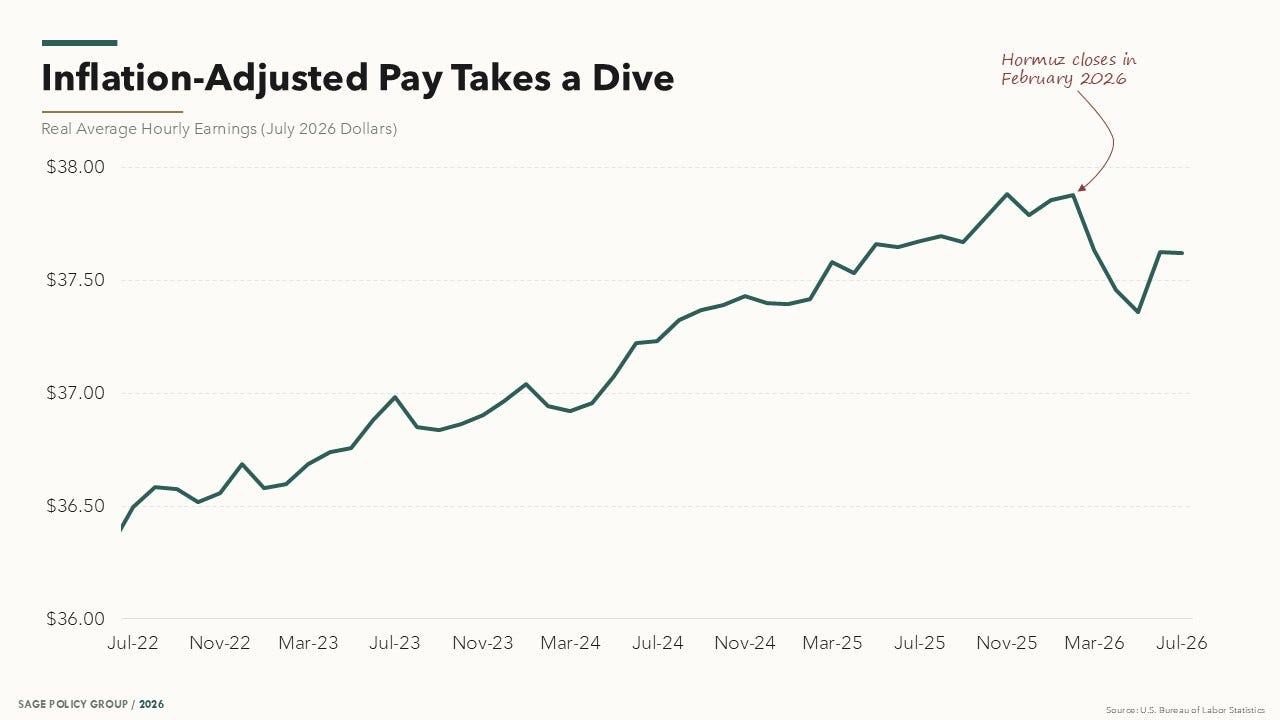
The flow chart above is fun and true: inflation pushes down sentiment even when earnings are rising faster than overall inflation, which was broadly the case in 2022 and 2023.
That changed when gas prices took off in February, and falling real earnings are a legitimate reason for people to be upset about the economy.
Part 3: Housing
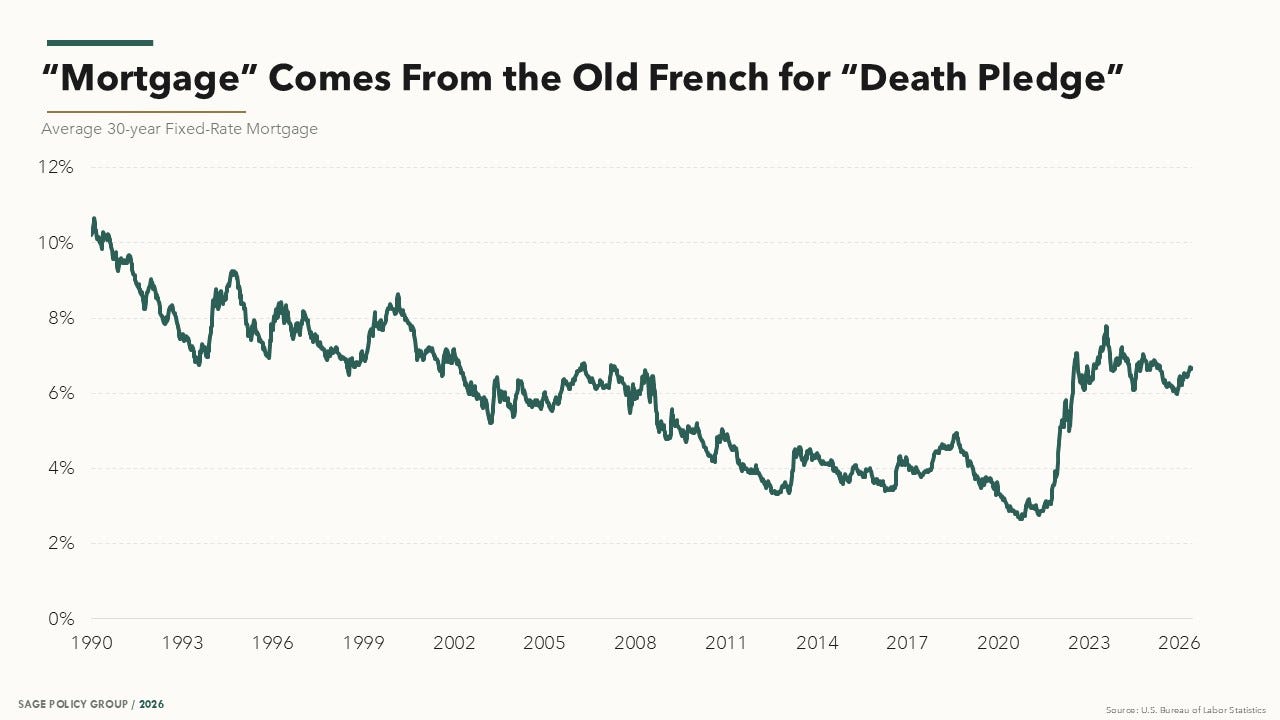
Won’t belabor this one: mortgage rates are high, and that makes it really expensive to buy a house. Prospective homebuyers are justified in hating the current economy.
Part 4: Supply-constrained goods & services
The average U.S. household is richer than ever and, in many ways, enjoys a lifestyle that would be unimaginable even a few decades ago. They watch a bigger, nicer TV and drive a bigger, nicer car. Their house is loaded with time-saving appliances. They take more vacations, and those vacations take them farther from home.
But all of those things aren’t particularly supply-constrained. Society can easily up the production of TVs and cars and appliances and airplanes.
It’s supply-constrained goods and services that have everyone pissed off. For example, consider these two facts:
The number of households with more than $200,000 in inflation-adjusted income has increased by 20x since 1967 and roughly doubled since 2013.
The capacity of Madison Square Garden (19,812) has not changed since 1967.
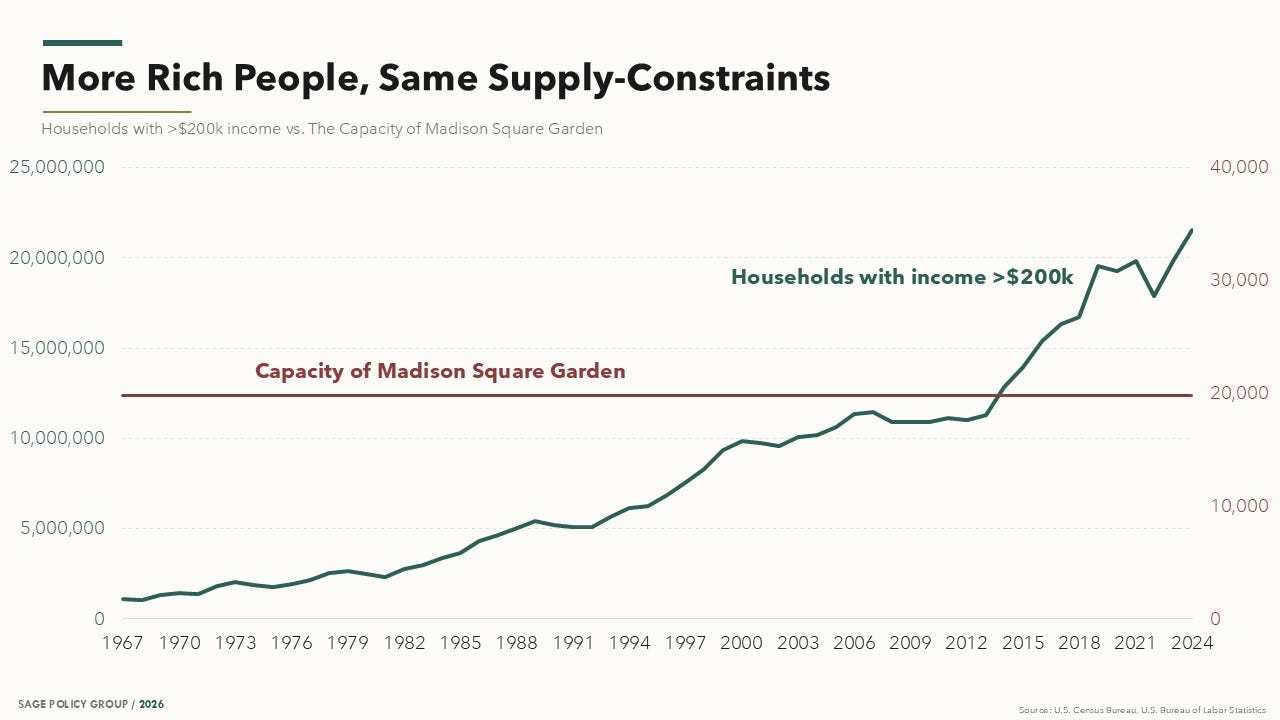
If you made (again, the inflation-adjusted equivalent of) $200,000 in 1967, you could definitely go to an NBA Finals game. You could go to all of them, maybe even the road ones too.
In 2026, it was borderline-irresponsible for a household making $200,000 to go to an NBA Finals game at Madison Square Garden; the lowest-priced tickets on resale markets were over $1,000.
This same dynamic applies to everything supply-constrained. The number of homes in nice neighborhoods has not doubled since 2013, nor has the capacity of Disney World or the enrollment at that nice private school.
This effect is present across the entire earnings distribution. The working-class family that used to rent a house at that nice local beach for a full week now gets a weekend in a condo (or a week at a cheaper destination).
An upper-middle-class family—maybe one earner is a doctor—that could be front row at a popular concert in the ’80s now sits in general admission at the Taylor Swift show.
The millionaire who would have had a Warhol hanging in their office in the ’80s now has to settle for a work by some artist you’ve never heard of.
Etc. etc.
Your ability to access these supply-constrained things/experiences depends on your income relative to everyone else rather than your income compared to overall prices, and the resulting lack of access makes people feel worse off than previous generations who attained the same level of financial success.
There’s no easy or quick solution for this. Madison Square Garden can’t double its capacity every decade, and good luck trying to get your favorite vacation town to build more housing.
What’s Next
We’ll (finally) have our Q&A out in the next few days, and maybe a construction piece too. After that, it’s Week in Review, our every-Friday post that gives you everything you need to know about the economy in a breezy five-minute read.
Week in Review is just for paying subscribers. If that’s not you, just click this button.
‘79-‘81 was worse, though the current may well exceed!
Excellent topic. Bridging the gap between what the data says and how people actually feel is critical right now. Thanks for sharing!