


Your Memorial Day barbecue cost a lot more in 2026 than it did last year. Beef prices are up 15%, hotdogs 11%, and even toppings like lettuce and tomatoes have outpaced broader inflation.
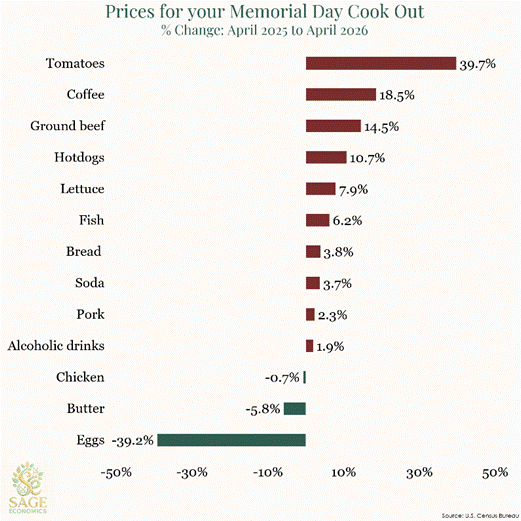
It’s not all bad. Serve chicken instead of burgers and you’ll actually spend less than you did last year. Beer prices have risen at a slower pace than inflation, and breakfast has gotten cheaper with egg prices down almost 40% year over year.
A few assorted thoughts on these prices in no particular order:
Cattle Herds are Shrinking
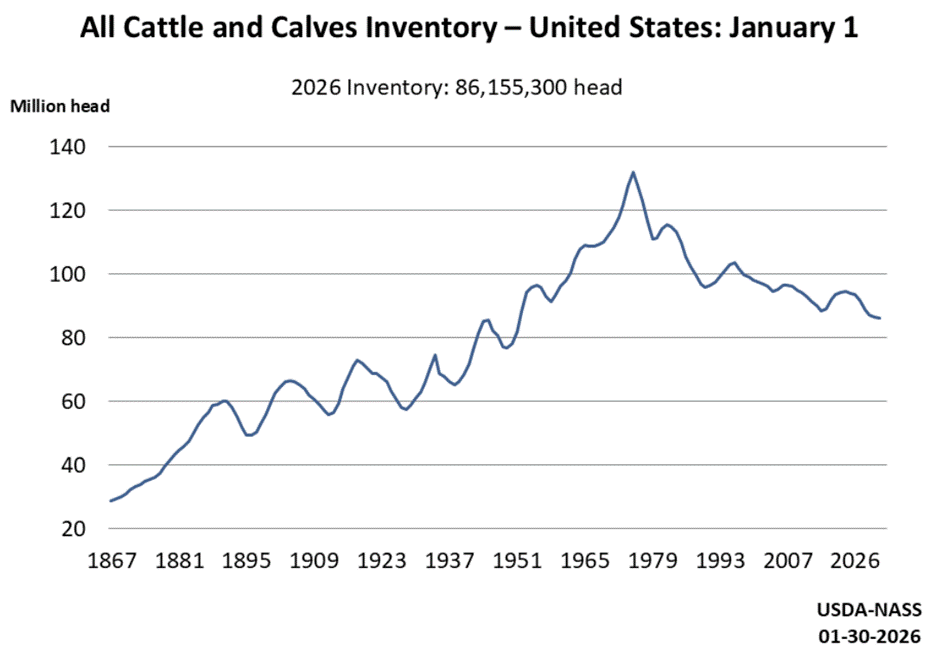
U.S. cattle herds have pretty steadily shrunk since the 1970s. We haven’t had this few cattle since the 1950s, when there were about 170 million fewer Americans. Broadly, that’s why prices are so high: demand for beef hasn’t changed, and there’s less of it to go around.
There’s also trade policy at work here. We tightly limit beef imports using a tariff-rate quota (TRQ). Before we hit the quota, beef imports face a low tariff. After that, they face a prohibitively expensive one.
In February, President Trump temporarily raised that quota in an effort to lower beef prices. It was then rumored that Trump would entirely suspend the TRQ, but those efforts are now indefinitely delayed despite ongoing beef price escalation because, no way around it, the beef industry punches above its weight class when it comes to lobbying.
While cattlemen’s gross political contributions are relatively modest, cattle production is concentrated in low-population states where the money required to win a Senate race is much lower. It only takes a few senators to influence policy, so the backing of, for instance, the six senators from Kansas, Oklahoma, and Montana can go a long way when it comes to keeping beef quotas in place.
And while cattle producers don’t want more imports, they also aren’t inclined to expand their herds. Expanding a herd means retaining heifers for breeding instead of selling them, and that’s particularly costly (and risky) when beef prices are so high. This is the type of market distortion that can arise when industries are protected from competition.
Beef prices probably aren’t coming down anytime soon, and they may start rising even faster because…
The Screwworm Strikes Back
In the 1950s, the U.S. eliminated screwworm flies—a deadly parasite that can decimate cattle herds—by mass-producing male screwworms, sterilizing them with radiation, and then releasing them into the wild.
Female screwworms only mate once, so when they tried en masse to mate with the sterilized males, the number of screwworm flies plummeted until the entire U.S. population was eliminated. We then pushed this effort south through Mexico and into central America, creating a containment barrier in Panama.
This is awesome, science fiction-worthy stuff.
The thing about science fiction is that the bad guys usually strike back, and that’s happening right now.
Screwworms recently broke through the containment barrier and have been detected in Mexico—there are several reasons, and you can read more here if you’re really interested—raising fears that they’re going to find their way back to the U.S.
We’re ramping up prevention efforts, but it’s a real risk for beef prices.
Tomatoes Smushed from All Sides
In July 2025, the White House got rid of an agreement that allowed Mexican tomatoes to enter the U.S. duty-free. This instantly pushed prices higher because about 65% of fresh tomatoes sold in the U.S. come from Mexico. More recently, weather has pummeled tomato production, with freeze damage in Florida and excessive rain in Mexico.
The end result: tomato prices are up about 55% since we started taxing Mexican tomato imports less than one year ago.
Egg Prices Come Crashing Down
You don’t hear as much about egg prices as you did in early 2025, when prices surged to over $6 a dozen. That’s because the cost has cratered, falling more than 60%.
The high prices were due to bird flu outbreaks devastating flocks. Those outbreaks have faded. Egg production has improved. Prices have fallen.
This is a fairly typical commodity cycle. There’s a supply disruption, prices surge, that provides a strong incentive to increase production, supply floods the market, and prices crater.
Looking Ahead
We’ll have a construction specific post out later this week (free for all subscribers). Next up after that is Week in Review, our every-Friday post that gives you everything you need to know about the economy in a breezy five-minute read. Week in Review is only for paying subscribers. If that’s not you and you want it to be, just click the button below.