


Last week, we warned that the return of screwworm flies could devastate U.S. cattle herds. Sure enough, a screwworm was detected in a calf in Texas this week. The USDA will try to contain their spread, a task made more difficult by the fact that DOGE cut 25% of the Animal and Plant Health Inspection Service’s staff.1
(If you really want to be freaked out by this development, Google what a human screwworm case looks like.)
Flesh eating larvae aside, this week brought several strong data releases including on manufacturing, the labor market, and a lot more.
Monday
Construction Spending
Construction spending increased 0.4% in April and is up about 1% year over year.
Residential spending increased a healthy 0.8% for the month due to a sharp increase in single-family spending, though single-family investment remains subdued.
Nonresidential spending also increased slightly for the month, but that was entirely due to public sector activity. Private nonresidential spending actually decreased in April, although that was mostly because of manufacturing megaprojects winding down (a topic we covered at length in our post from yesterday).
ISM Manufacturing PMI
Manufacturing activity grew for the fifth straight month in May, according to this survey of industry purchasing managers (i.e., the people in charge of buying inputs). That’s the good news. The bad news is that the prices component remained sky-high, and high diesel prices are really starting to hurt, according to respondents’ comments.
Tuesday
Job Opening & Labor Turnover Survey (JOLTS)
The number of open, unfilled jobs rose sharply in April and is now at the highest level since May 2024.
More importantly, there’s now more than one job opening for every unemployed person for the first time since the middle of last year. This suggests the labor supply is tightening, and that could lead to faster wage increases over the coming months.
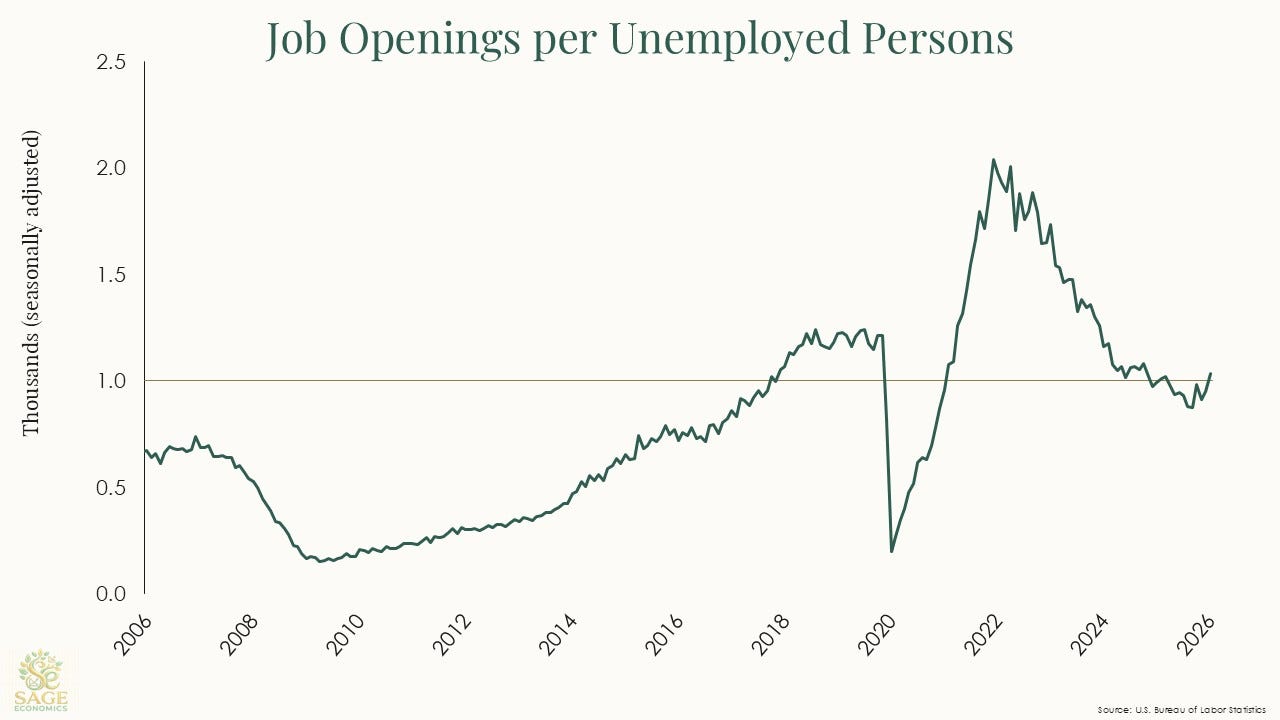
That increase aside, it remains a low-hire, low-fire, low-quit labor market. There just isn’t a lot of churn going on at the moment.
Oil Stuff
Both gas and diesel prices fell considerably during the week ending June 1st despite the Strait of Hormuz remaining closed. Oil prices are hovering in the low $90s, well below where they were over the past several weeks and way above where they were prior to the conflict in Iran.
Oil markets seem optimistic about a near-term resolution (or about the market’s ability to adjust to a long-term closure) and unconcerned by steadily falling crude oil stockpiles.
Wednesday
ADP Employment Report
Private employers added an impressive 122,000 jobs in May, according to payroll processing firm ADP. This is yet another sign that the demand for labor is heating up, even if this estimate matters less than the Friday one from the BLS.
ISM Services PMI
The services side of the economy grew for the 23rd straight month, according to this survey of industry purchasing managers. As was the case with the manufacturing PMI, prices are rising quickly and purchasing managers do not have good things to say about the effects of higher oil prices.
The Beige Book
The economy appears to be growing, according to this Fed-published report based on interviews with business leaders and other market experts in each of the Fed’s 12 regions.
A big takeaway here is that lower income households are struggling with rising prices while higher income households are unbothered. As one Fed District noted, “Sales were also robust for some businesses that cater to higher-income consumers such as landscaping and golf simulators.”
Mortgage Applications
Mortgage applications fell again despite slightly lower mortgage rates. Buyers remain uninterested in borrowing at interest rates in the mid 6% range.
Thursday
Mortgage Rates
Mortgage rates inched lower this week but are still way too high. Given recent moves in the bond market, they’re going to rise again next week.
Jobless Claims
Initial jobless claims increased to the highest level since February, but that’s probably just a seasonal quirk. These remain low, and there’s nothing to worry about with layoffs for the time being.
Friday
BLS Jobs Report
U.S. employers added a booming 172,000 jobs in May, and the unemployment rate held steady at 4.3%. Nothing to dislike here besides what it means for interest rates: not only are rate hikes now more likely than rate cuts, they may happen sooner than previously expected.
Links of the Week
A compute tax is a REALLY dumb idea (Economic Forces)
The struggle against excessive corporate power needs better standard-bearers (Noahpinion)
Why Are Men So Bad at Making—and Keeping—Friends? (Derek Thompson)
Final Thoughts
After this week, Anirban’s outlook for the economy is: Worse
I know this is a shocker, but today’s terrific jobs report indicates that the U.S. economy is overheating. While the summer is shaping up to be phenomenal for business investment and consumer spending, there are additional headwinds that face us going forward like sticky inflation and higher interest rates. Bottom line, the short-term outlook is great, and the longer-term one is sketchy.
After this week, Zack’s outlook for the economy is: Better
Am I worried about rates? Sure, but even with inflation picking up I think a strong labor market is preferable to the alternative.
Looking Ahead
Next week is all about inflation data.
Some are blaming DOGE for the screwworm return, but as far as we can tell, it would have happened without the cuts. It’s our ability to contain it from here that could be jeopardized by the scaled down APHIS.