


Construction Trend Tuesday covers one (hopefully) interesting industry trend in a quick, two-minute read. You can access the archive of CTT posts here.
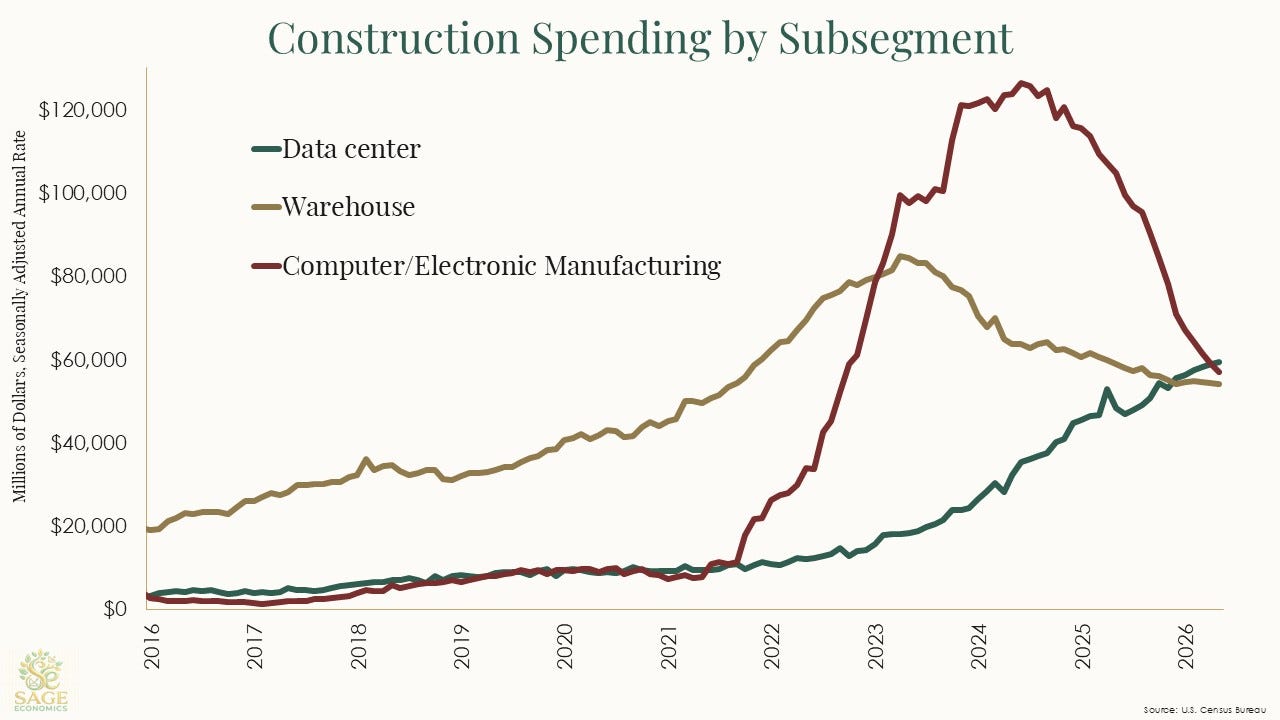
Way back in October 2025, we wrote about how data center construction wasn’t that large compared to other boom segments. Specifically, it had yet to reach the lofty heights of warehouse construction and the even loftier heights of computer/electronic manufacturing construction.
It was a fun little narrative, and one that came with an elegant explanation: despite the gaudy overall data center cap ex numbers, only a small portion—maybe 20-30%—of that total goes toward actual construction. The rest is used for the equipment that goes inside the facility.
A fun little narrative, and one we can safely retire.1 Data center spending has surged another 24% since we wrote that and is now larger than those two aforementioned boom categories.
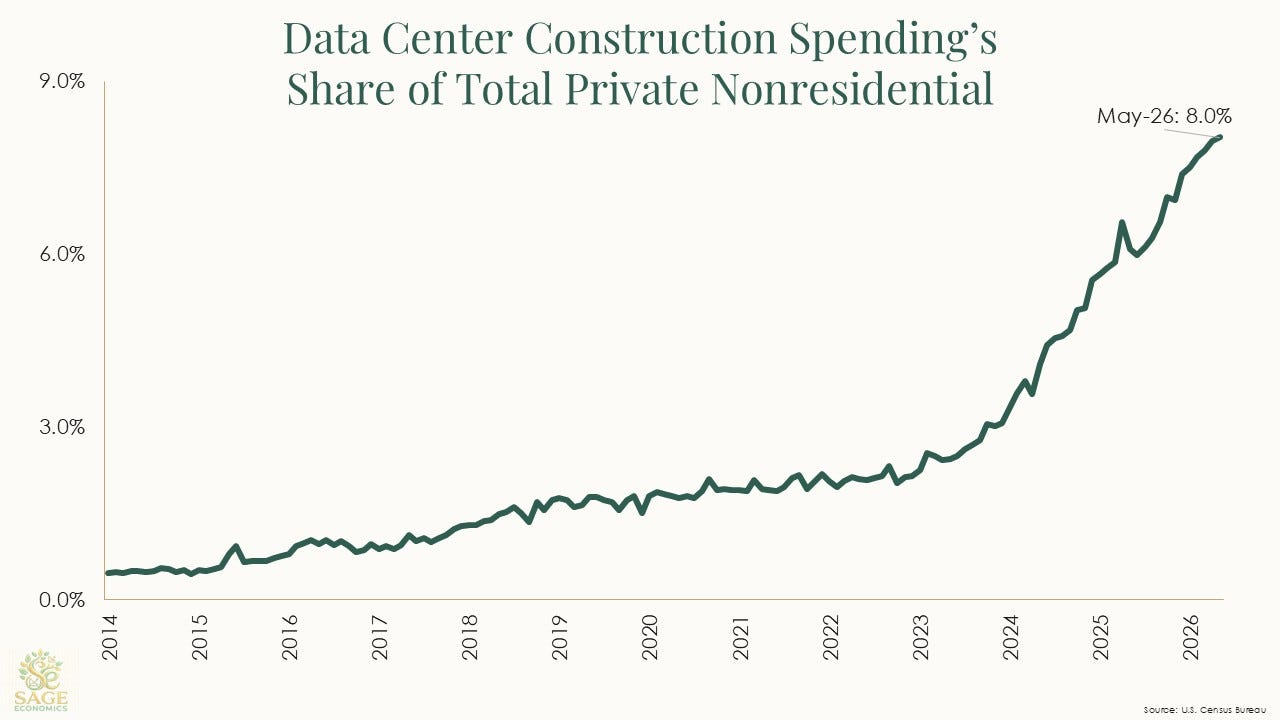
Data centers now account for 8% of all private nonresidential construction spending. If current trends hold, it will reach 10% by January 2027.
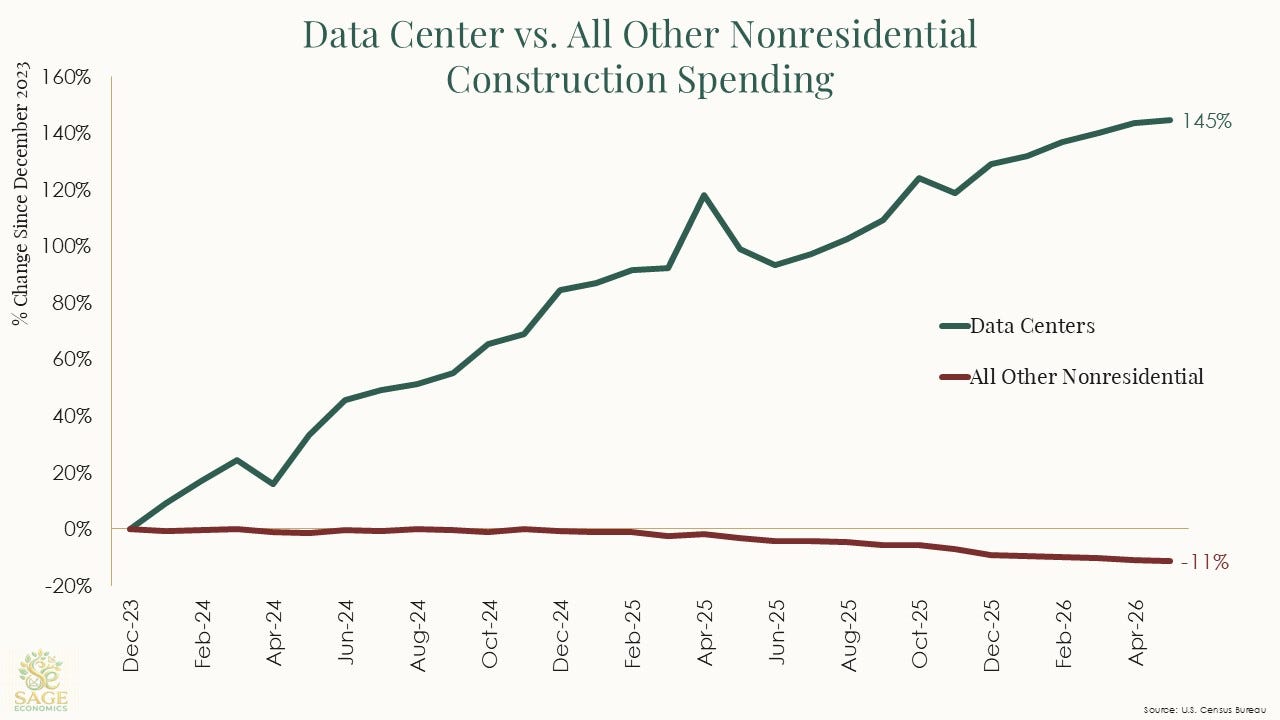
Data centers are sucking up all the oxygen in the room, and by oxygen, we mean capital. This is especially difficult for other segments because, with rates high and lending standards tight, there’s not a lot of oxygen to go around.
Private nonresidential construction spending excluding data centers reached an all-time high in December 2023. Since that time, it’s fallen 11% while spending on data centers is up a staggering 145%.
We fully expect these trends to continue. Back in the 2010s we were hired to estimate economic and fiscal impacts for a wide assortment of development types.2 In the early 2020s, it shifted toward residential, mixed-use, and warehouse/distribution.
Since 2023, we’ve done almost nothing but data center work.
What’s Next
Next up is Week in Review, our every-Friday post that covers all the economic news and data in a breezy, five-minute read.
Week in Review is only for paying subscribers. If that’s not you and you want it to be, just click the subscribe button.
To be clear, we knew this was coming, but the speed of it is still surprising.
The “we” here is referring to Sage Policy Group. Need an economic or fiscal impact study? Let us know!
Data centers are a fascinating asset class from a lot of angles, and underwriting them is no exception. Banks, PE, and public markets struggle with how to view the CRE, equipment, tenant lease, and power aspects when lending, investing, and buying.